How to Choose a Poultry Climate Controller: From Small Houses to Large Farm Projects
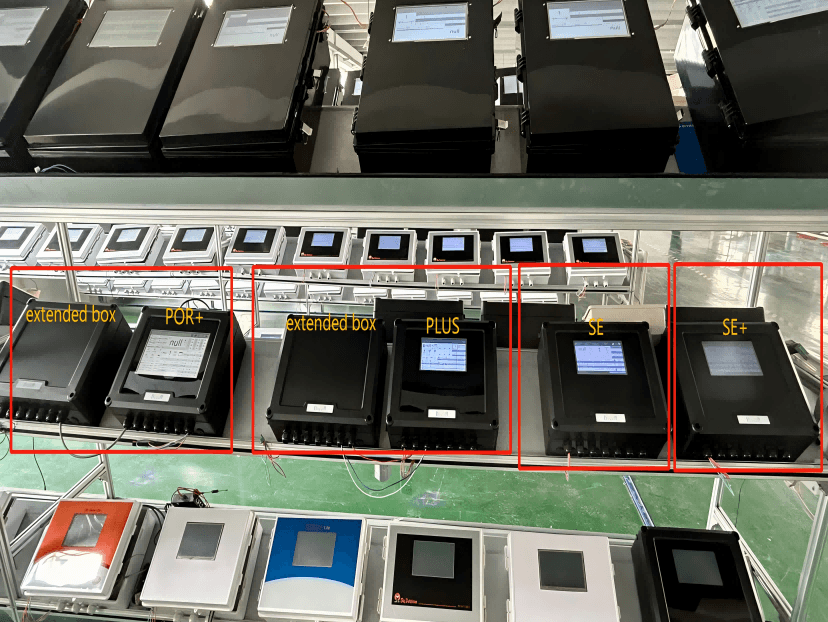
After years of working with poultry projects in different markets, we keep seeing the same purchasing mistake: farm owners and contractors assume that the controller with the longest feature list must be the better controller.
In practice, that is rarely how a good project starts. A small family poultry house may buy an advanced controller and then use only temperature control and basic timer ventilation, while purchase cost, setup work and maintenance complexity all increase. The opposite problem is just as common: a large poultry project chooses a basic controller to reduce the initial budget, and two years later the farm adds variable-speed fans, more sensors or another ventilation zone, only to find the controller has no room to expand.
The right way to choose a poultry climate controller is therefore not to ask "which model has the most functions?" A more useful question is: what does this poultry house need the controller to do today, and what is likely to change over the next three to five years? House size, ventilation strategy, connected devices, monitoring requirements and future expansion all need to be considered before the model is selected.
Start With the Equipment List, Not Farm Size
A climate controller is only useful when its inputs, outputs and control logic match the equipment installed in the house. Before comparing models, make a simple equipment list.
How many temperature sensors will be installed? How many fixed-speed exhaust fan groups are there? Does the project use variable-speed fans? How many heaters, cooling pumps and air inlets need to be controlled? Will the farm monitor only temperature, or also humidity, CO₂, ammonia and house negative pressure? Does the poultry house need one common control zone or several independent areas?
These questions usually tell us more than the controller brochure. Future plans should be discussed at the same time: if the farm is likely to expand the house, add ventilation equipment or introduce more sensors within three to five years, some spare capacity is sensible. But spare capacity should be planned, not guessed. For an overview of the available poultry environmental controller range, start with the equipment schedule rather than the product catalogue.
That balance between meeting today's requirements and keeping a justified expansion path is the basis of good controller selection.
Quick Comparison of Five Poultry Controller Families
All five controller families below are selection options; none is a single answer for every farm. Use this table to narrow the field, then confirm against the actual equipment list.
| Controller | Relay Architecture | Fixed Fan Groups | Variable-Speed Channels | Ventilation Stages | Inlet Groups | Temp. Inputs | Best-Fit Boundary |
|---|---|---|---|---|---|---|---|
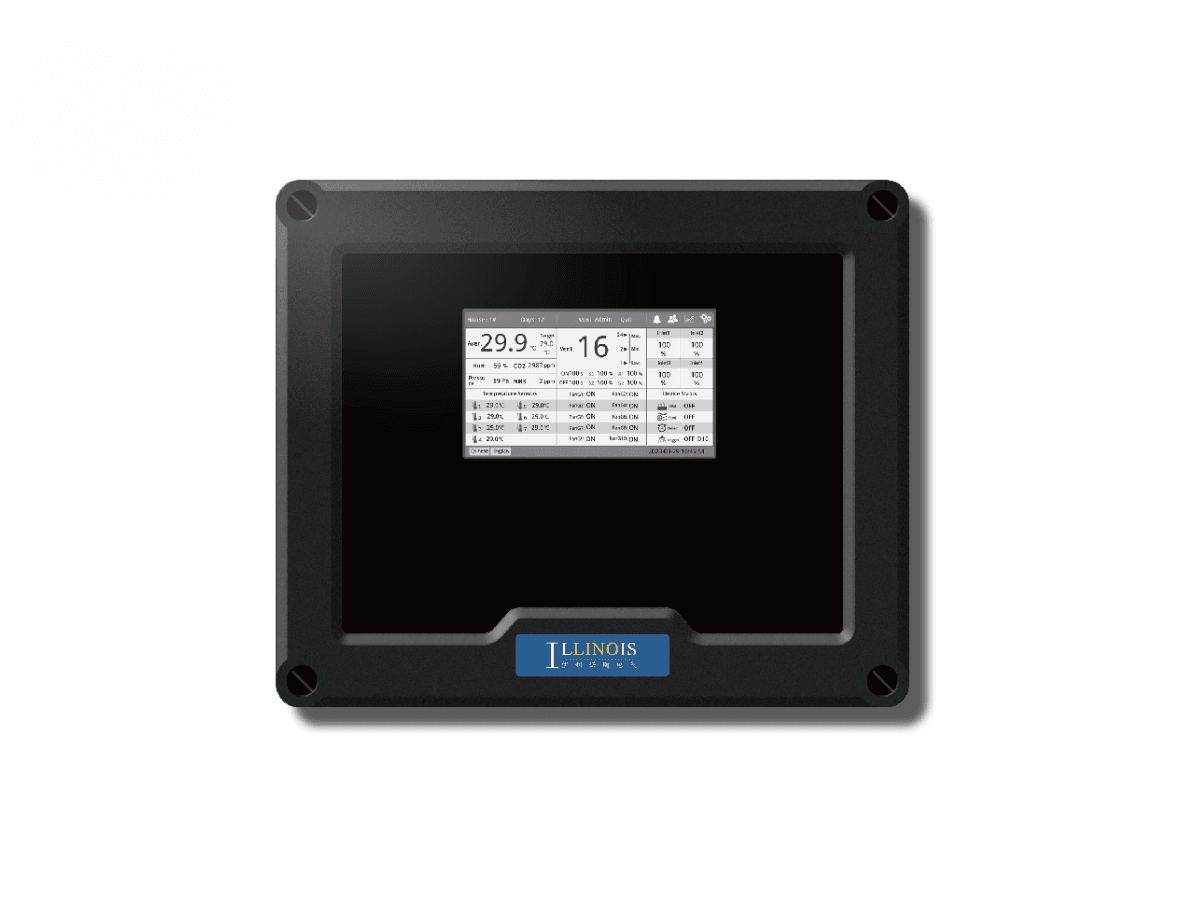
| LINO Touch SE | 10 onboard; up to 18 | Up to 8 | Up to 2 | Confirm by project | Up to 4 | Up to 7 | Smaller houses requiring limited, defined expansion |
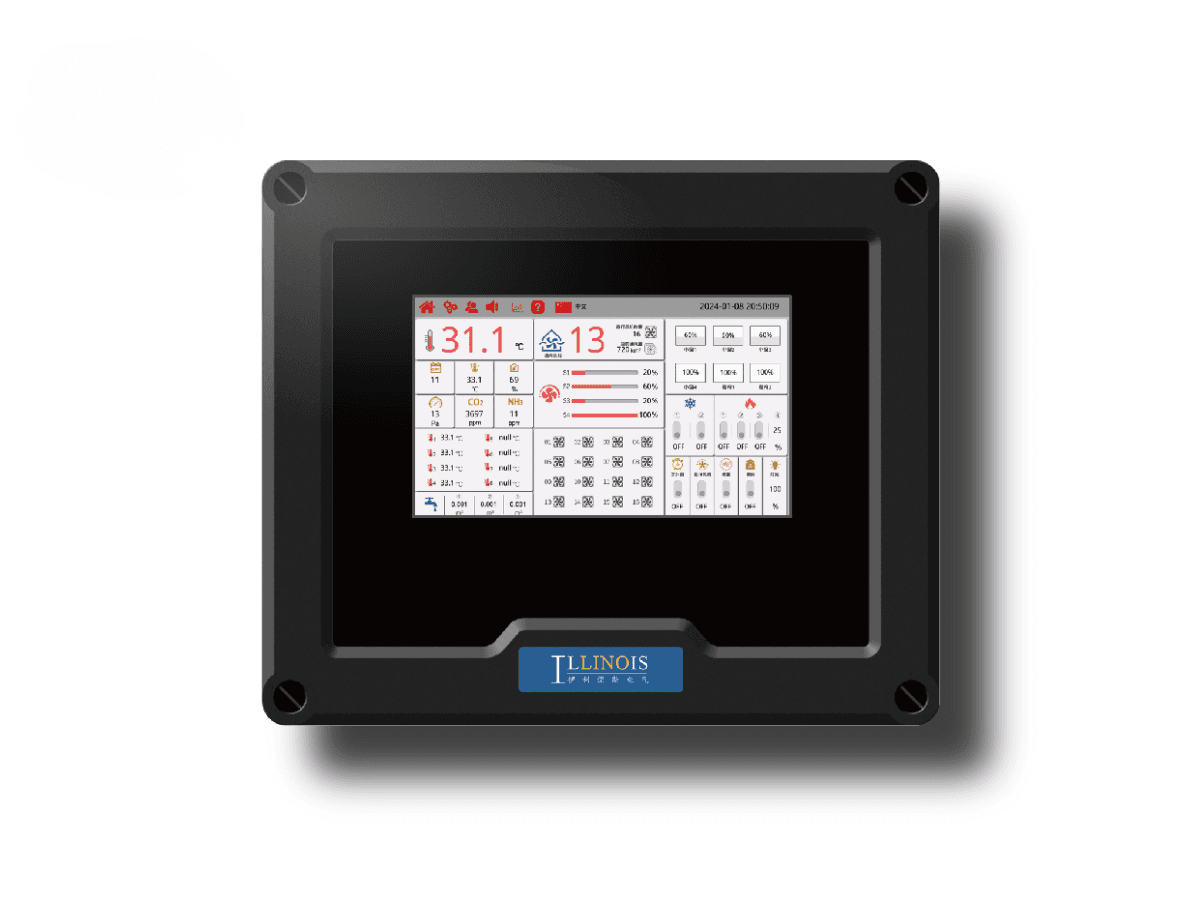
| LINO Touch SE+ | Fixed 15 | Up to 10 | Up to 4 | Up to 24 | Up to 4 | Up to 7 | Fixed-capacity projects needing broader sensing and RS485 |
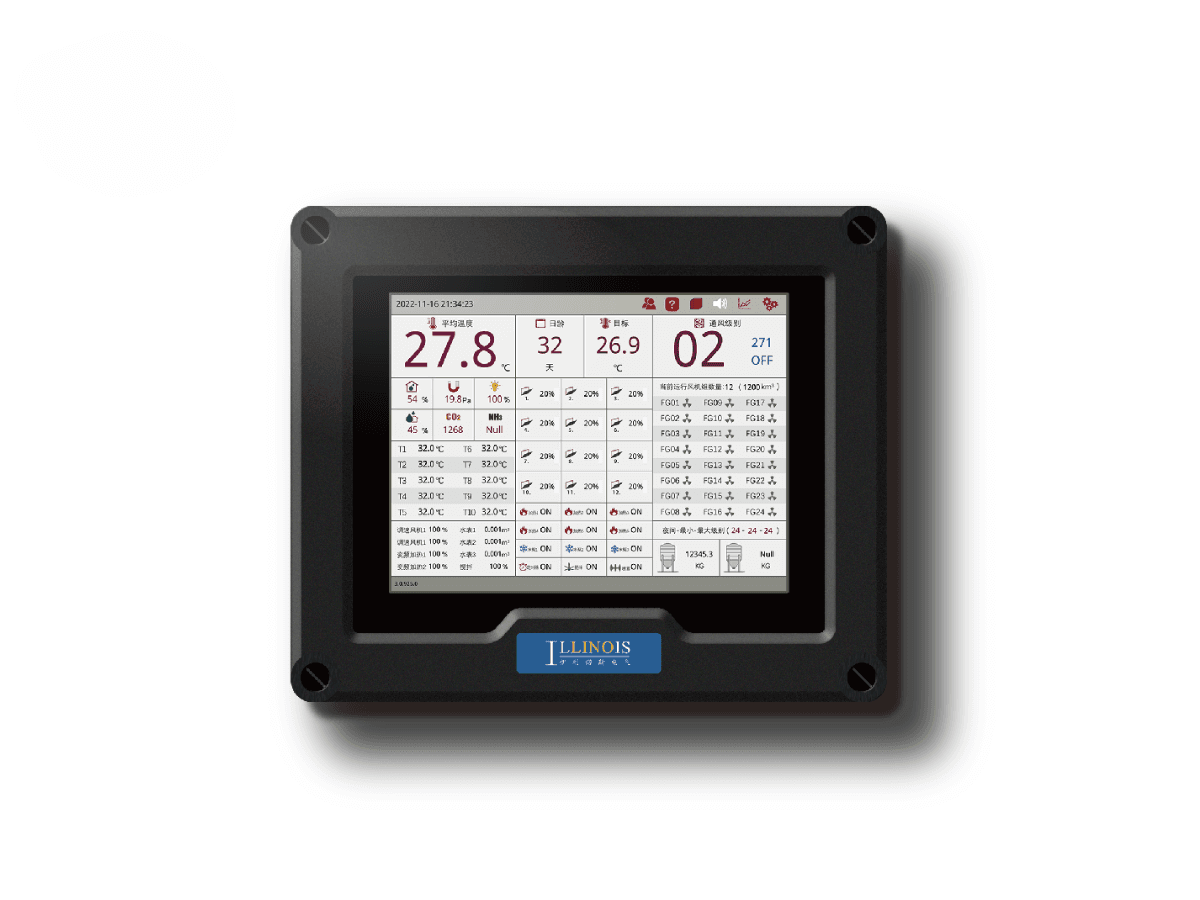
| LINO Touch MAX | 12 onboard; up to 36 | Up to 16 | Up to 4 | Up to 30 | Up to 6 | Up to 8 | Standard commercial houses requiring coordinated control |
| LINO Touch Pro+ | Up to 56 | Up to 24 | Up to 2 | Up to 30 | Up to 12 | Up to 10 | Project-configured, OEM and modular expansion applications |
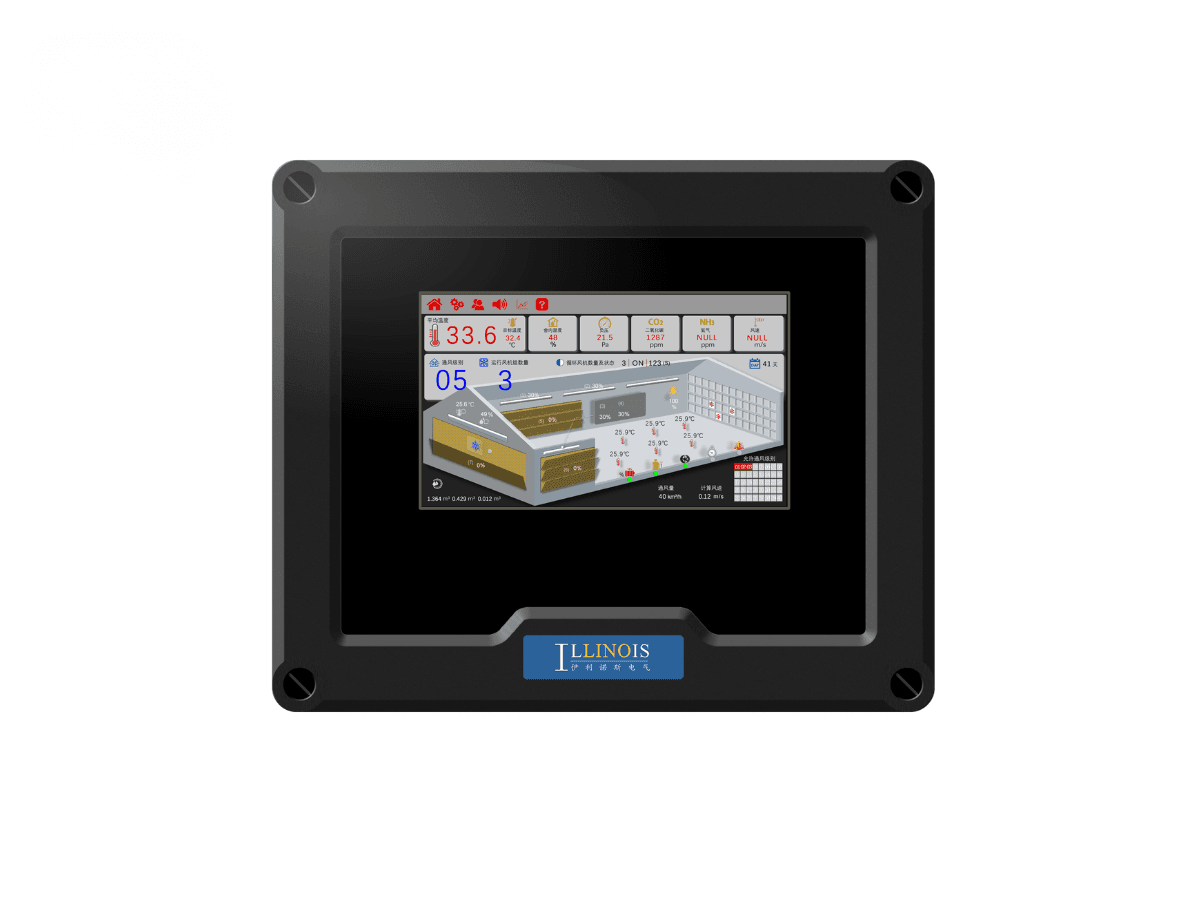
| LN-9900 | 15 onboard; up to 79 | Up to 40 | Up to 4 | Up to 40 | Up to 12 | Up to 16 | Large, high-capacity and multi-zone projects |
Published capacities are maximum configuration limits rather than standard supplied quantities. Expansion modules, sensor packages, relay allocation, communication protocols and electrical-panel requirements must be confirmed against the approved project equipment list.
Compare the Five Controller Options
LINO Touch SE: Compact Control for Smaller Houses
Choose the compact controller for smaller poultry and pig houses when a smaller poultry house or pig unit needs a compact 7-inch interface, up to eight fixed-speed fan groups, two variable-speed channels, four inlet groups and a relay budget that can expand from 10 to 18 outputs. The equipment list must fit this defined architecture before production.
Its job is not to make a simple house unnecessarily complicated. For a house that mainly needs stable temperature control, routine ventilation, heating control, basic cooling and a limited number of connected devices, a simple control architecture is often the better choice. This is especially important on smaller farms where one or two people may be responsible for both animal management and equipment operation. A controller that staff understand and use correctly every day is more valuable than an advanced system whose additional functions are never configured.
LINO Touch SE+: Fixed Capacity with Broader Sensing and RS485
The fixed-capacity poultry controller with three RS485 interfaces is the 7-inch option for projects that need 15 relay outputs, four variable-speed channels, up to ten fixed-speed fan groups, four inlet groups, up to 24 ventilation stages and three RS485 interfaces. It is not an unlimited relay-expansion platform.
As farm management becomes more precise, temperature usually stops being the only environmental value that matters. Humidity affects how birds respond to heat, CO₂ and ammonia help indicate air-quality problems, and house negative pressure is closely connected with how air moves through a mechanically ventilated building. At the same time, more farms are moving from fixed-speed fan operation toward variable-speed ventilation. SE+ is intended for farms that want to move from simple temperature control toward multi-parameter poultry environmental control, providing more environmental information and more detailed ventilation control without immediately moving into the architecture required by a large commercial complex.
LINO Touch MAX: Standard Commercial House Control
The standard commercial poultry-house controller with expandable I/O is the option for a defined but expandable configuration. It supports up to 16 fixed-speed fan groups, four variable-speed channels, 30 ventilation stages, six inlet groups and a relay structure that can expand from 12 onboard outputs to a published maximum of 36.
A modern medium or large poultry house usually has a different control problem: several groups of variable-speed fans, high-capacity fixed-speed exhaust fans, multiple air inlets and separate heating zones. The ventilation strategy also changes during production, moving between minimum ventilation, transitional ventilation and tunnel ventilation. These systems need to move between stages in a controlled way rather than operating each piece of equipment independently. The controller cannot correct a poor mechanical layout, so the MAX should be selected when the house already requires more coordinated control—not simply because it is a higher model.
LINO Touch Pro+: Project-Configured Modular Expansion
The modular project-configured poultry controller is intended for project-configured and OEM-oriented poultry systems that cannot be defined by a small fixed relay map. Its modular architecture supports up to 56 relay outputs, 24 fan groups, 30 ventilation stages and 12 inlet groups, subject to the approved expansion design.
Some poultry projects are difficult to size because the first construction stage is not the final stage. A farm may begin with a limited number of fan groups and later add more zones, heating sections or air-inlet control. For these projects, modularity becomes more important. Instead of asking only "how many points do we need now?", the project team should also ask "which functions may need to be added later, and can the controller expand without replacing the main unit?" Before ordering, the buyer should clearly distinguish between functions built into the main controller and functions that require additional expansion modules.
LN-9900: High-Capacity Multi-Zone Control
The high-capacity multi-zone poultry environmental controller is the option for large, multi-zone or I/O-intensive projects. Its published architecture supports up to 79 relay outputs, 40 fixed-speed fan groups, 40 ventilation stages, 12 inlet groups and 16 temperature inputs when the required extension modules are included.
At the upper end of the range are large poultry farms and integrated projects where the control structure becomes much more demanding: larger numbers of fixed-speed and variable-speed fans, multiple air-inlet groups, more ventilation stages and detailed zone-management requirements. Again, scale alone should not decide the model. A large building with a simple ventilation arrangement may not need the same controller architecture as a farm with multiple zones and many independent devices. The equipment list and control logic should determine the controller—not the project name.
Check the Complete Electrical and Ventilation System
A complete poultry environmental control system also includes control cabinets, sensors, contactors, motors, valves, actuators, communication links and emergency protection. The controller outputs need to match the field equipment: a variable-speed fan has different control requirements from a basic contactor-driven fan, air-inlet actuators need to be included in the logic, and heating zones need corresponding outputs. Alarm and emergency functions need to be considered before commissioning—not after a fault occurs.
A fan group may contain one or more fans assigned to the same control stage. Relay and control outputs do not mean that high-load fans, heaters or pumps can be connected directly without contactors, motor protection or an appropriate electrical cabinet. For the mechanical side of this work, see our poultry-house fan selection based on static pressure and real airflow, for winter commissioning and inlet coordination, our winter ventilation commissioning and inlet coordination guide, and for variable-speed drive considerations, our demand-based EC fan control for poultry ventilation. For the sensing side, review our guide to multi-sensor poultry-house climate control.
Unused expansion points should also have a purpose. Reserving some capacity is sensible, but reserving large numbers of ports without knowing why they are needed simply increases cost and system complexity. For large projects, the controller schedule and field equipment list should be reviewed together before production begins.
For an applied example of sensors, dust and backup-ventilation planning, read our Kenya field notes.
Communication, Documentation and Overseas Support
For international projects, the long-term result depends on more than I/O quantity. Different countries use different electrical systems, climate conditions vary, and farm staff have different levels of automation experience. In daily operation, practical functions such as parameter backup, multilingual interfaces, alarm history and remote technical support can be more valuable than a larger screen.
Document and integration support must be confirmed against the controller model, firmware version, project scope and confidentiality requirements. The presence of an RS485 interface alone does not confirm compatibility with a specific third-party system. In a Pakistan project, LINO Touch SE+ was reviewed for a monitoring-only Modbus RTU request over an RS485 link. The case shows why interface quantity alone cannot confirm integration compatibility; firmware, protocol, register permissions and wiring still require project-specific verification.
The supplier should be able to provide the relevant wiring drawings, equipment lists and control-logic documentation, together with commissioning guidance. Not every worker needs to understand every engineering parameter, but the people responsible for daily operation should know how to check environmental values, respond to alarms and restore the correct settings when necessary.
Information Required Before Controller Selection
We normally recommend working through controller selection in this order:
1. List all controlled equipment. Count fans, heaters, cooling pumps, air inlets and other devices, and confirm how each one operates.
2. Define the environmental sensors. Decide whether the house needs temperature only or also humidity, CO₂, ammonia and negative-pressure monitoring.
3. Confirm the ventilation strategy. Check whether the project requires variable-speed ventilation, staged fan control, tunnel ventilation, independent zones or other advanced functions.
4. Check present I/O requirements. Match the controller capacity to the real equipment list rather than estimating from house size alone.
5. Review the next three to five years. Consider planned farm expansion, additional ventilation equipment and future sensor requirements.
6. Evaluate the operating team. Choose a system that site staff can realistically operate, back up and troubleshoot.
This process normally prevents the two most expensive selection mistakes: too much controller for a simple house, or too little controller for a growing project.
Frequently Asked Questions
Does a poultry controller with more functions always work better?
No. The appropriate controller is the one whose inputs, outputs, ventilation stages and communication functions match the approved equipment list while leaving justified room for expansion.
Can poultry controller selection be based on bird capacity alone?
No. Bird capacity may help describe the project, but final selection must follow the number of fan groups, variable-speed channels, air inlets, sensors, heating and cooling functions, relay outputs, communication requirements and future expansion.
Can a large farm operate with only the environmental controller main unit?
No. A complete system may also require sensors, electrical cabinets, contactors, motor protection, actuators, communication equipment, alarms and emergency functions. The controller schedule must match the field equipment.
What should be reserved for future farm expansion?
Reserve capacity only for a documented expansion plan. Confirm whether future fan groups, inlet zones, sensors or auxiliary equipment require onboard capacity or optional modules. Published maximum capacity is not the standard supplied configuration.
What information is required before a controller quotation?
Provide the house dimensions, bird type and capacity, ventilation strategy, fixed-speed and variable-speed fan schedule, inlet groups, heating and cooling equipment, sensor list, local voltage, communication requirements, electrical drawings and realistic expansion plan.
Request a Poultry Controller Configuration Review
Share the house dimensions, bird type and capacity, ventilation mode, fixed-speed and variable-speed fan schedule, inlet groups, heating and cooling equipment, required sensors, supply voltage, communication requirements and three-to-five-year expansion plan. We can compare the required I/O and operating sequence with LINO Touch SE, SE+, MAX, Pro+ and LN-9900.
Request a Controller Selection Review
For a broader view of why existing houses in Southeast Asia need adaptable control, see our Poultry Asia 2026 field observations.
For a recent example of these questions in the field, see our field observations from a broiler farm near Meidum.
Confirm the ammonia and humidity control logic for staged ventilation before finalizing sensor compatibility and the control sequence.
See how field readings become a minimum-ventilation control sequence.