Poultry Asia 2026 Southeast Asia Poultry Automation Gaps
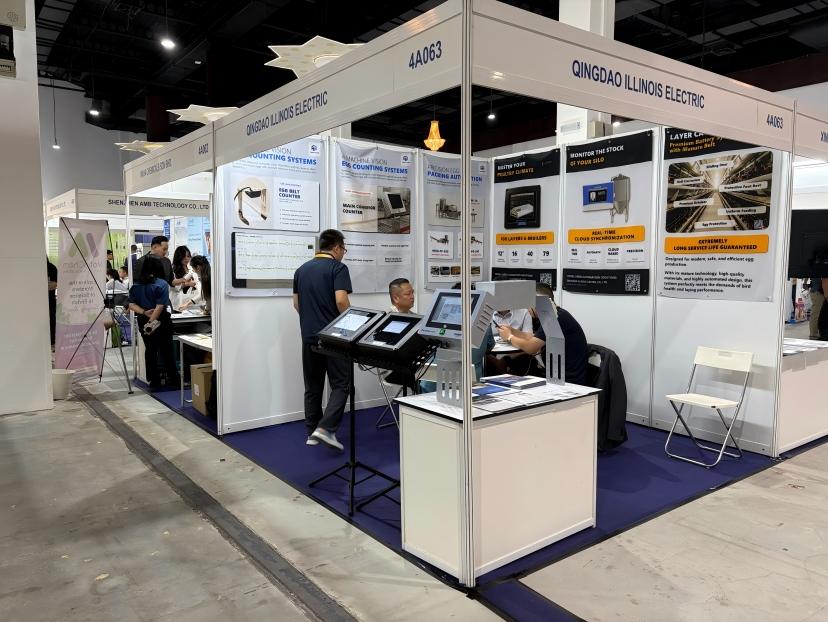
Walking through Poultry Asia 2026 in Kuala Lumpur, we kept hearing a practical question. Farms already know that automation matters. What they want to know is how to make it work in the houses they operate today.
Over three days at the World Trade Centre Kuala Lumpur, discussions with farm teams, engineers and equipment partners returned to existing buildings, older electrical systems and the realities of local maintenance. The conversations suggested a gap between visible investment in poultry facilities and the control systems that make those facilities manageable.
That gap is worth examining after the exhibition, when the product displays are gone and the work of specifying a real project begins.
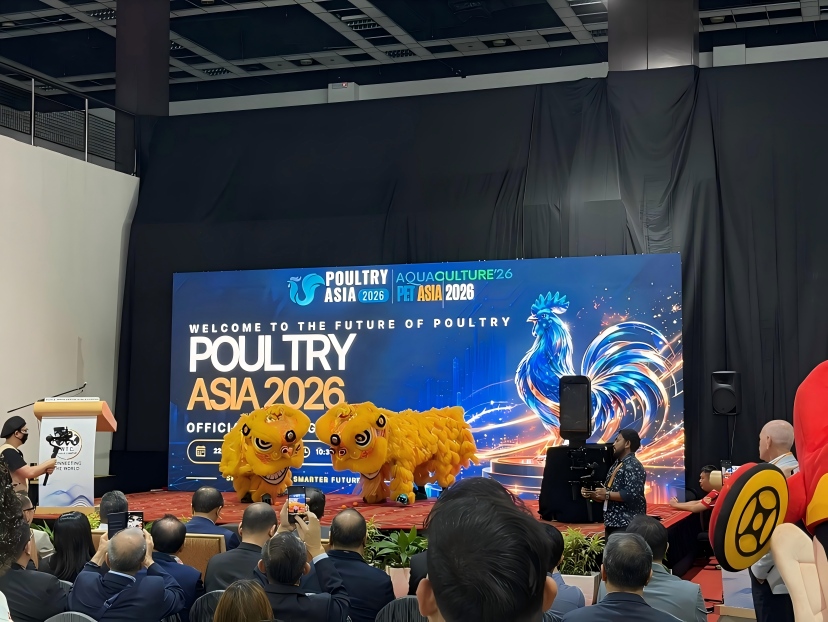
Opening ceremony at Poultry Asia 2026 at World Trade Centre Kuala Lumpur
A modern house can still have basic control
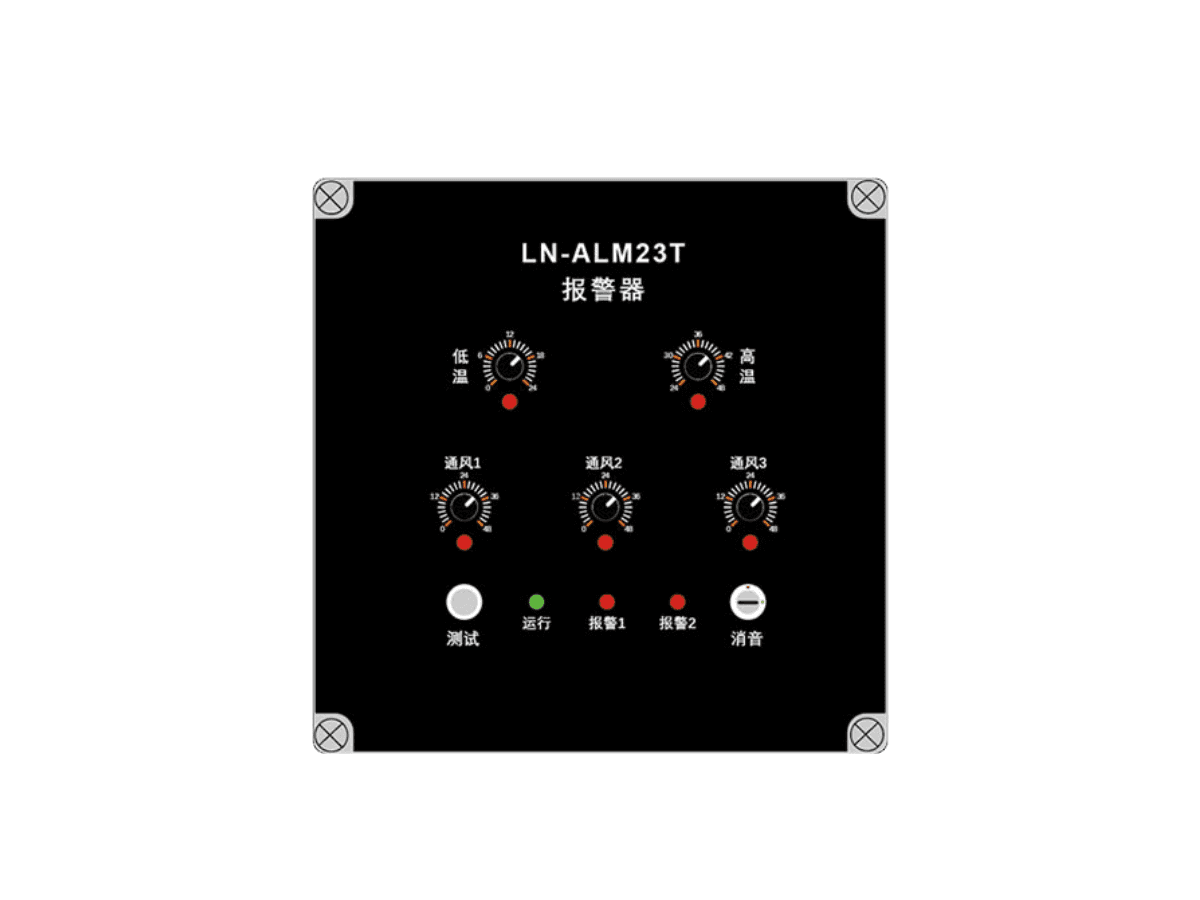
A farm may have enclosed housing, tunnel fans, feeding equipment and an egg collection line, yet still rely on simple staged switching for ventilation. Some additions were installed at different times, so each system works on its own. Temperature may be visible to the operator while humidity, pressure and equipment status are less closely coordinated.
In a hot and humid poultry house, these limitations matter. Fans and sensors run for long periods, and a faulty measurement or delayed response can affect daily management. A controller needs to suit the equipment around it and the conditions where it is installed. A long function list alone cannot establish that fit.
Local engineers raised questions about electrical protection, sensor service life and what happens after a part fails. These questions belong in the design discussion. Service access and spare parts can determine whether a promising installation remains useful through the next production cycle.
This is also why commissioning should include a period of observing actual house behaviour. The set point that looks sensible in a brochure may produce frequent switching once birds, weather and building leakage are involved. Farm staff should be able to see which sensor caused a response and which fan stage is active. Without that visibility, an operator may bypass the automatic sequence and return to manual switching. A reliable control upgrade depends as much on understandable operation as it does on the hardware in the cabinet.
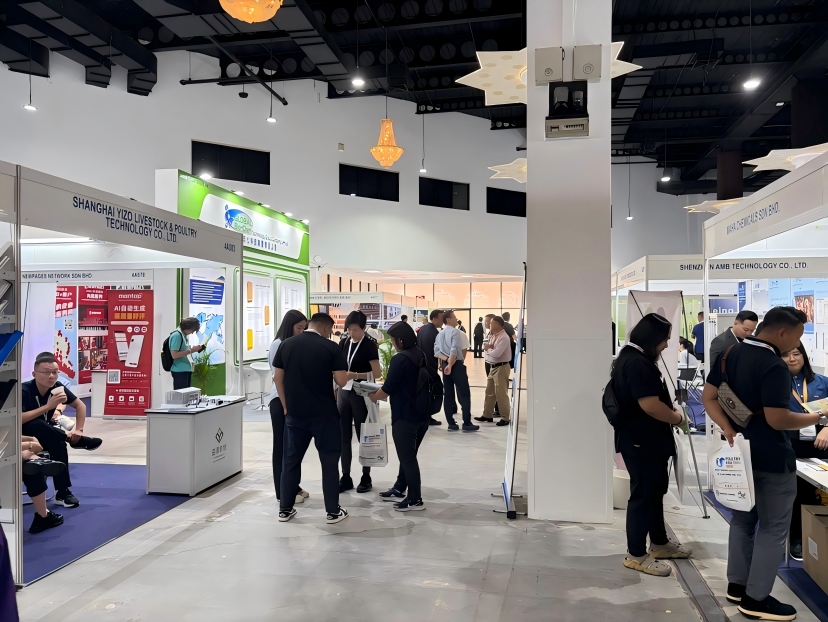
Trade visitors and poultry industry exhibitors at Poultry Asia 2026 in Kuala Lumpur
The retrofit question changes the specification
Southeast Asia is also a market for upgrading houses already in use. Many owners have no reason to discard functioning fans, feed lines or egg conveyors. They want a better control layer or clearer operating data while retaining equipment with useful life remaining.
That makes the first site survey more important than the catalogue. An engineer needs to record existing fan stages, wiring, sensor locations, control panels and communication interfaces before selecting a new controller. Mixed-brand poultry equipment integration may require interface checks and staged commissioning. The goal is a workable upgrade, with the disruption and replacement cost understood in advance.
For some houses, the next step is adding environmental sensing. For others it is variable-speed ventilation alongside fixed-speed fans, or production data capture on an existing egg line. Each project starts with a different constraint. The smallest change that solves that constraint can be more valuable than a broad replacement proposal.
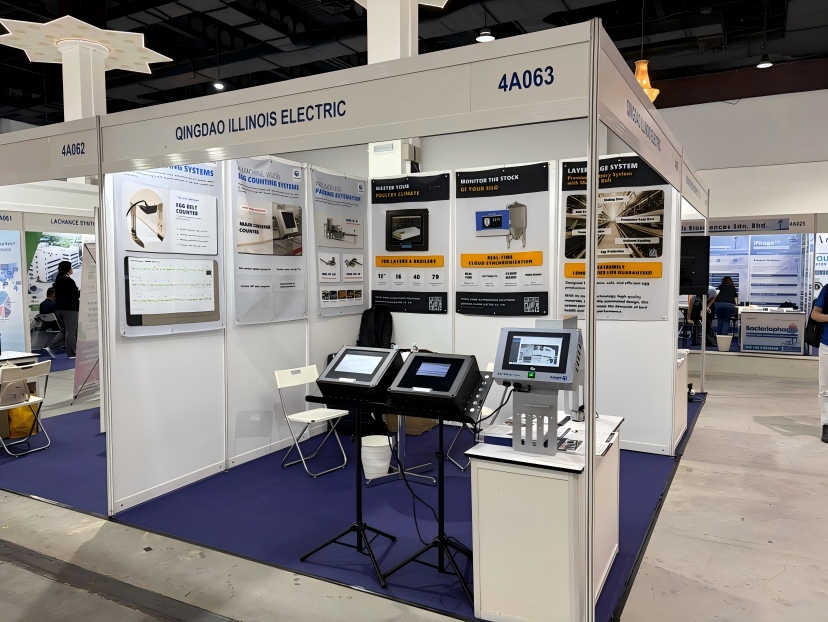
Qingdao Illinois Electric booth 4A063 displaying poultry automation solutions at Poultry Asia 2026
Tropical adaptation begins before installation
Heat, moisture, dust and long operating hours affect electronics and the people maintaining them. A product intended for this region needs a clear installation plan as well as appropriate protection. Buyers asked about wiring instructions, parameter backup, replacement sensors and how local technicians would troubleshoot a fault.
A practical specification should ask what remains operational if communication is lost, how alarms reach staff, and whether a technician can restore settings after changing a controller. It should also identify which functions work with existing equipment and which require extra modules or changes to wiring. These details are easy to overlook at an exhibition and difficult to correct once a house is running.
Local support is therefore an engineering issue. Documentation that a contractor can use on site and parts that can be identified quickly reduce the time between diagnosing a problem and restoring normal operation.
The same service questions apply after commissioning. A farm should retain its parameter file and wiring schedule, and the local partner should know which spare sensor or board matches the installed version. Training should cover common alarms and safe manual operation, not merely how to navigate the touchscreen. This is especially relevant when farm staff change between production cycles. A system that only one visiting engineer understands is difficult to sustain, even if it performs well at handover.
Feed inventory sits between manual checks and large platforms
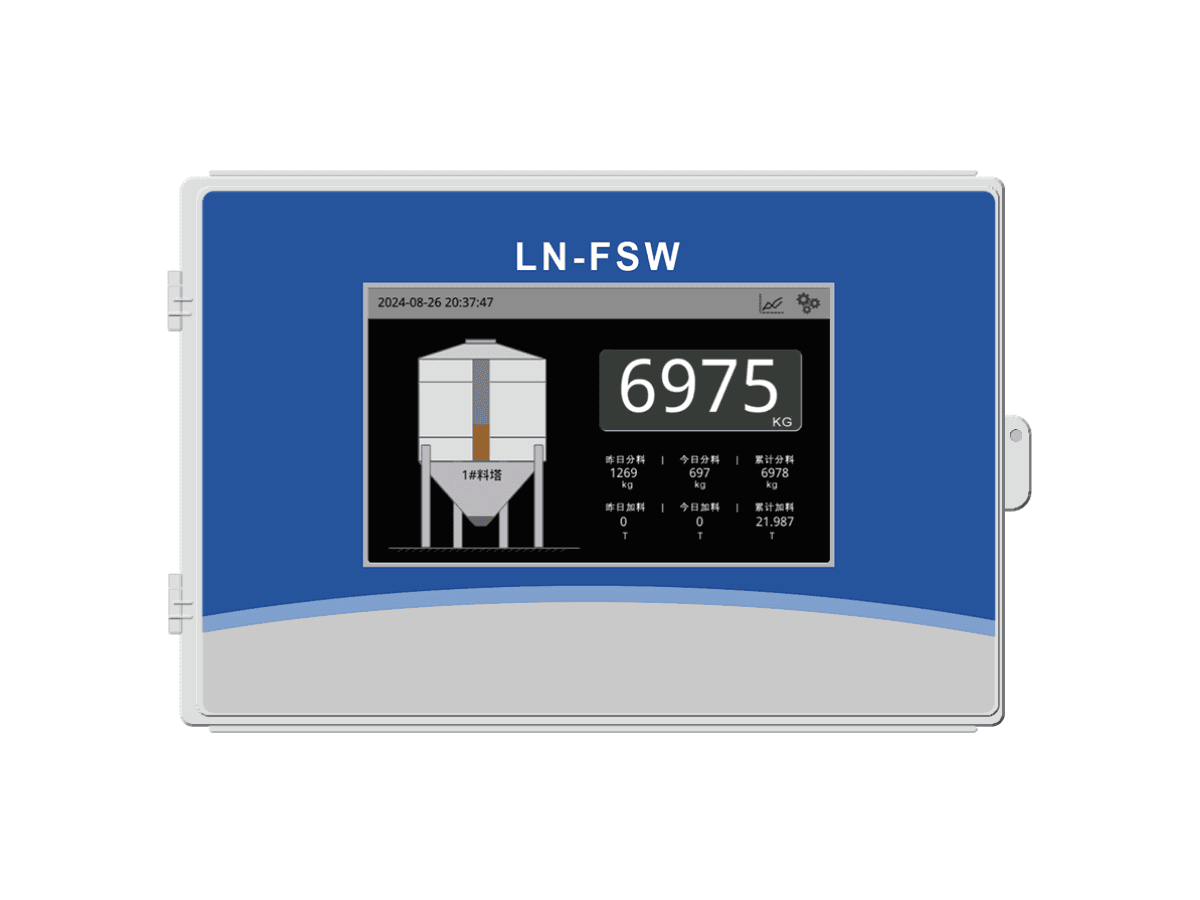
Feed stock came up as a surprisingly concrete concern. When delivery timing changes because of weather, transport or holidays, an estimate of what remains in a silo may be insufficient. The farm needs to know its current stock and recent rate of consumption early enough to act.
Large integrated operations may already have extensive feed-management systems. Smaller and medium-sized farms often need a narrower solution: a weight record, a low-stock alert and a way to review the trend. Feed silo monitoring can serve that need without imposing a full warehouse automation project.
The useful threshold is operational. A warning should reflect consumption and supplier lead time, rather than trigger at an arbitrary percentage. That is the difference between collecting data and helping a manager make a timely decision.
There are limits to what a weight reading alone can tell a manager. A silo may receive a partial delivery, and feed movement or calibration drift can distort a short interval. For that reason, the installation plan should address load-cell placement, calibration and how deliveries are entered or identified. A simple chart with clear dates may be more useful to the farm than a dashboard full of metrics. The point is to make the record trustworthy enough for ordering decisions, not to claim that one sensor explains every change in consumption.
An egg count becomes more useful when it can be compared
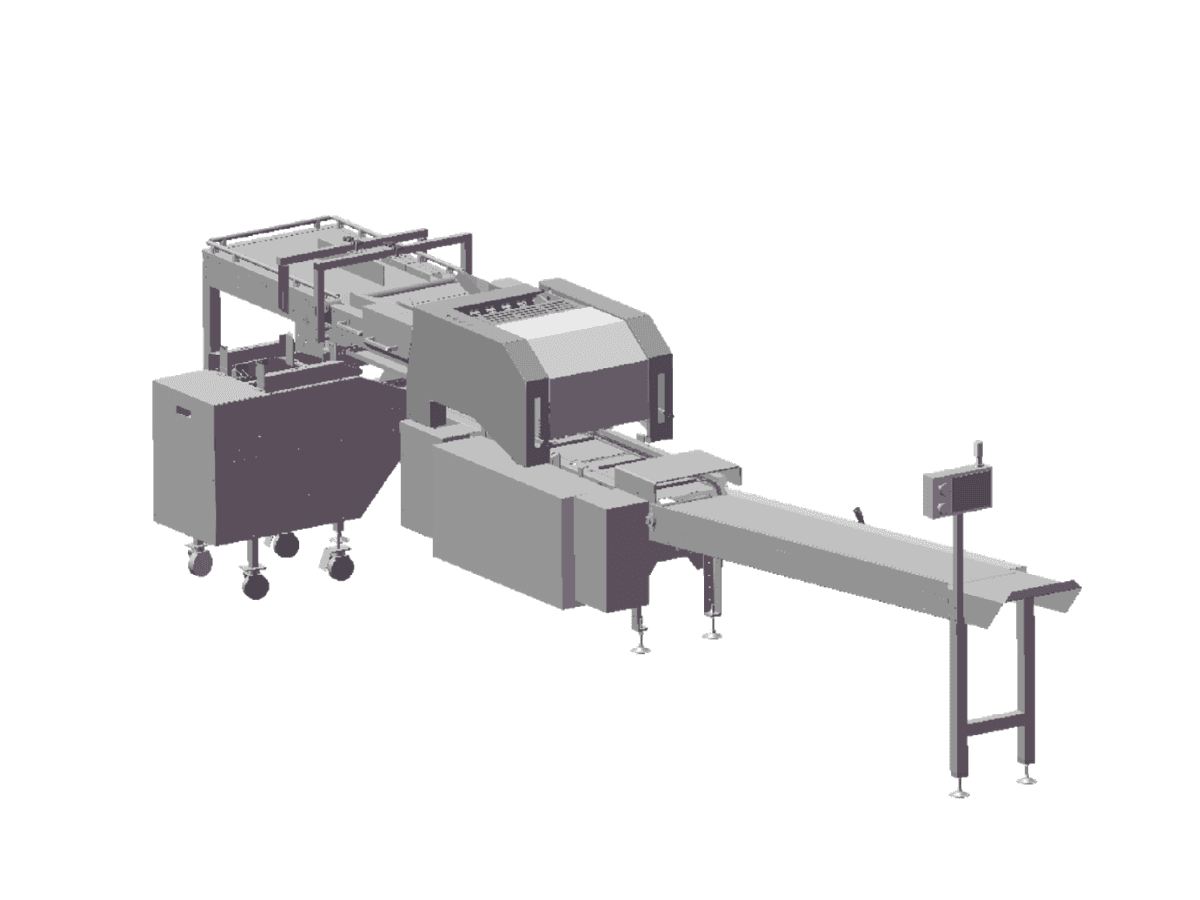
Layer farms are asking for more than a final daily count. Hourly output, line comparisons and historical records can reveal changes that a single total hides. But the data only helps if the counting device fits the existing conveyor and the records can be retrieved and understood by farm staff.
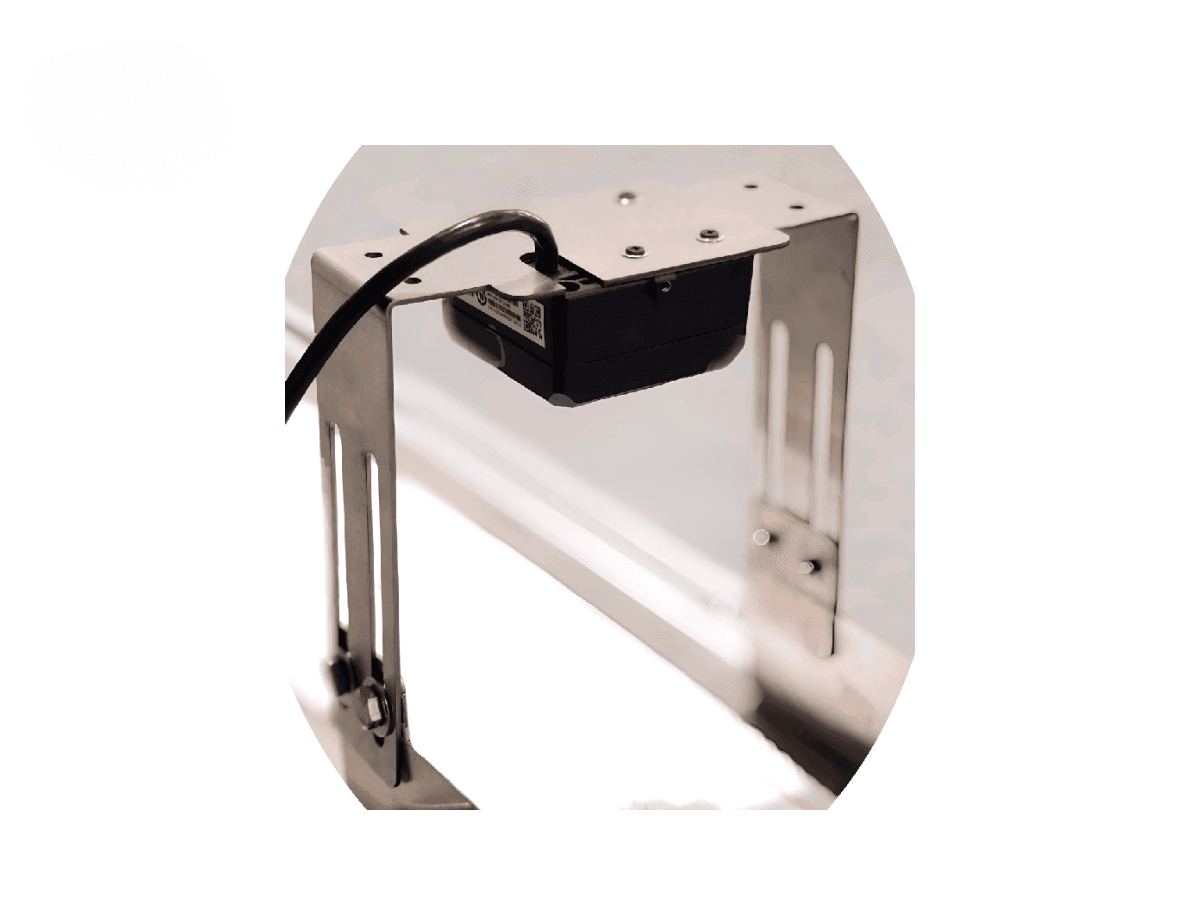
Machine-vision egg counting prompted discussions about installation geometry, counting accuracy and the information retained after counting. An existing collection line does not necessarily need replacing to improve production visibility. A retrofit-friendly counter may be the first practical step toward better layer farm egg production data tracking.
The questions were specific: where does the device mount, how does it handle the current belt, and what happens to the records at the end of each day? Those questions should guide the specification before a buyer compares headline accuracy figures.
The data also needs a consistent definition. If eggs move between lines, if the conveyor stops, or if a shift crosses midnight, operators need to understand what the daily total represents. A counting system should make those assumptions explicit and permit a supervisor to reconcile unusual days. Only then can a farm compare one day or one flock with another without mistaking a recording change for a production change.
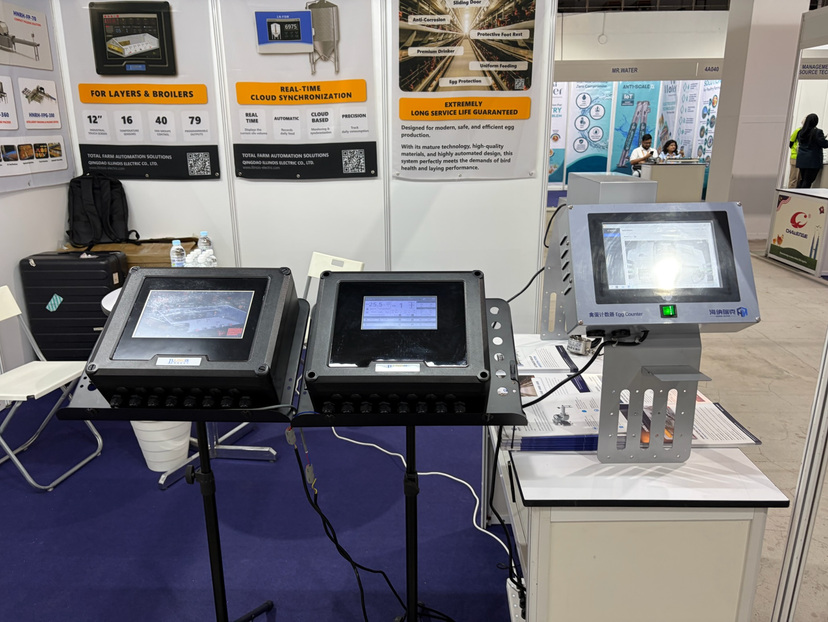
Poultry climate controllers and machine vision egg counter displayed at Poultry Asia 2026
What we will take into the next project
The exhibition gave us a clearer way to approach regional projects. For a retrofit, document the installed equipment first. For a tropical house, discuss protection, spares and service access early. For feed and egg monitoring, begin with the decision the farm needs to make from the data.This is where Southeast Asia’s poultry automation opportunity is becoming more precise. Owners are investing in better houses and looking for upgrades they can operate and maintain. The strongest proposals will fit the wiring, climate, budget and daily routines of those farms, then leave room for the next improvement.