Broiler House Tunnel Ventilation: How to Balance Airflow, Airspeed and Staged Control
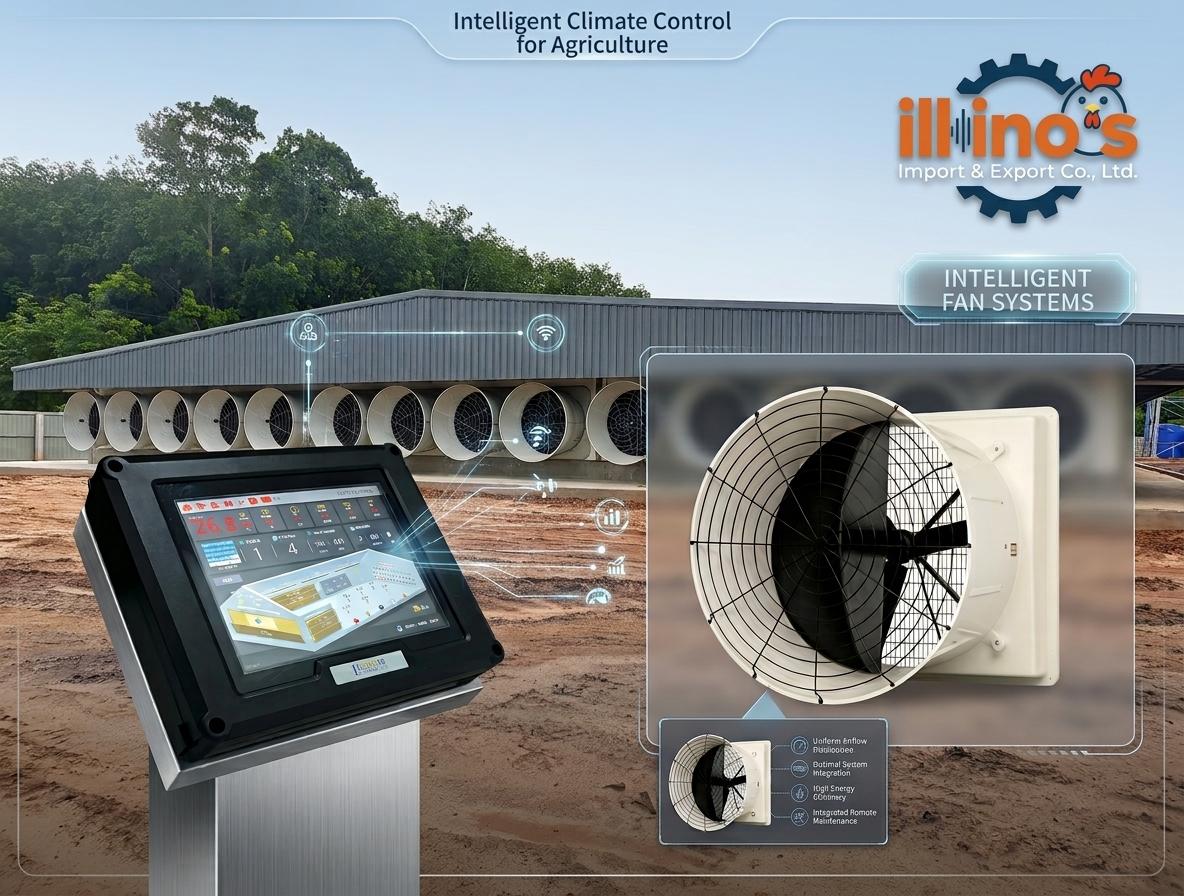
Every hot season, poultry farms in Southeast Asia, South America, the Middle East and Central Asia face the same question: why are broilers still panting and reducing feed intake even when the house already has many exhaust fans?
The usual response is to add more fans.
But fan quantity alone does not determine whether a poultry house can manage extreme heat.
For a commercial broiler house, effective broiler house tunnel ventilation depends on several factors working together: total exhaust airflow, bird-level airspeed, house static pressure, inlet area, building tightness and the way fans and cooling equipment are staged by the environmental controller.
If one part of this system is poorly matched, adding another fan may produce far less improvement than expected.
Broilers cannot sweat. During hot weather they rely heavily on respiration and air movement around the body to release heat. When high temperature is combined with high humidity, evaporative cooling becomes more difficult and the risk of heat stress increases rapidly.
A properly designed poultry ventilation system should therefore do more than move a large volume of air through the building.
It should create stable, predictable and evenly distributed airflow through the occupied area of the poultry house.
Why Fan Nameplate Airflow Is Not Enough
Tunnel ventilation is widely used in long, enclosed broiler houses.
Fresh air enters from one end of the building, travels along the length of the house and is exhausted by a bank of fans at the opposite end.
On paper, sizing the system can look simple:
required airflow ÷ fan capacity = number of fans.
In practice, however, the airflow printed on a fan nameplate does not automatically equal the airflow that will be delivered after installation.
Actual performance can be influenced by:
· poultry house static pressure;
· inlet and shutter resistance;
· dust accumulation on fan components;
· fan spacing;
· leakage through doors and wall gaps;
· cone and discharge resistance;
· installation quality;
· maintenance condition.
This is why poultry house static pressure should always be considered together with airflow.
During overseas poultry-house inspections, two problems appear repeatedly.
The first is insufficient inlet area.
When many exhaust fans operate at high speed but the available inlet opening is too small, negative pressure rises. The fans then work against greater resistance, and their actual airflow can fall significantly below the expected value.
The second problem is uncontrolled leakage.
If side doors, wall joints or other openings allow large amounts of air to enter before reaching the designed tunnel inlet, fresh air can take a short path toward the exhaust end. The middle or far end of the building may then receive much less useful air movement.
In both cases, adding more fans does not necessarily solve the problem.
The first step should be to identify where the airflow is being restricted or bypassed.
Choose Fan Capacity According to the House, Not a Standard Template
Different broiler houses need different fan combinations.
For broader fan, inlet and controller planning before equipment selection, review our broiler-house ventilation design and equipment-selection guide.
For many conventional commercial poultry houses, a 50-inch cone fan for commercial broiler tunnel ventilation can provide a practical balance between exhaust capacity, energy use and maintenance requirements.
For very long houses, high stocking densities or regions with prolonged extreme summer temperatures, a 57-inch high-airflow fan for peak summer tunnel ventilation can provide additional peak capacity when the house reaches its highest heat load.
The important point is that neither fan size should be selected simply because one is larger.
Fan selection should consider:
· poultry-house length and width;
· bird capacity and final live weight;
· building tightness;
· local peak summer temperature;
· required total exhaust airflow;
· target bird-level airspeed;
· acceptable static pressure;
· cooling-pad or inlet resistance;
· available electrical capacity.
A larger fan is useful only when the rest of the ventilation system allows it to operate effectively.
If the inlet area is insufficient or the building has severe uncontrolled leakage, the expected increase in airflow may not reach the bird area.
For engineering contractors and poultry equipment buyers, this is why ventilation proposals should include both fan selection and system boundary conditions.
The correct question is not:
How many large fans can fit on the end wall?
It is:
What combination of fan capacity, inlet area and static pressure will create the required air movement throughout this specific poultry house?
Bird-Level Airspeed Matters as Much as Total Airflow
Total airflow tells us how much air is being moved through the poultry house.
It does not automatically tell us what the birds are experiencing.
During hot weather, bird-level airspeed in a broiler house becomes especially important because moving air helps birds release body heat.
A system may technically exhaust a large volume of air while still producing uneven airspeed inside the building.
This can happen when:
· air enters through unintended openings;
· the house cross-section is poorly matched to airflow;
· inlet distribution is uneven;
· fans operate under excessive static pressure;
· obstructions interrupt the air path;
· some fans are dirty or underperforming.
This is why commissioning should include measurements at bird height rather than relying only on controller temperature readings or fan specifications.
Measurements should be taken at several locations, including the front, middle and exhaust end of the house.
If airflow is strong near the fans but weak in the middle of the building, the farm does not have a fan-quantity problem alone. It has an airflow-distribution problem.
For hot weather broiler ventilation, the objective should be consistent useful air movement through the occupied zone, not simply the highest possible exhaust number on paper.
Build Tunnel Ventilation Stages Around Airflow and Static Pressure
Another common weakness in older poultry houses is simple temperature-based ON/OFF control.
When the temperature reaches a threshold, several or even all fans start at the same time.
This creates two problems.
First, airflow can change too quickly. Younger birds may experience sudden drafts, especially if the air-inlet system is not coordinated with the fan stages.
Second, repeated full-load starting and stopping increases unnecessary mechanical and electrical stress.
A more stable tunnel ventilation strategy uses progressive stages.
When environmental demand is still low, variable-speed fans can maintain a base level of fresh-air exchange.
As house temperature and heat load increase, additional fixed-speed fan groups are introduced gradually.
Air-inlet openings should increase with the exhaust capacity so that the system maintains suitable pressure and airflow distribution.
When the house reaches peak summer conditions, the main 50-inch or 57-inch cone fans can operate as the primary heat-removal stage.
In a tunnel ventilation system, this creates a smoother transition:
base ventilation → transition stages → initial tunnel stage → full tunnel ventilation
At each transition, fan groups, air-inlet area, static pressure and bird-level airspeed should be checked together so that air moves evenly along the house length instead of collecting at one end.
The purpose is to prevent abrupt changes while ensuring that the system can still reach full ventilation capacity when required.
Match Controller Capacity to Tunnel Ventilation Stages
A staged ventilation strategy depends on more than the fans themselves.
The poultry environmental controller must coordinate fan groups, inlets, cooling equipment, alarms and emergency functions.
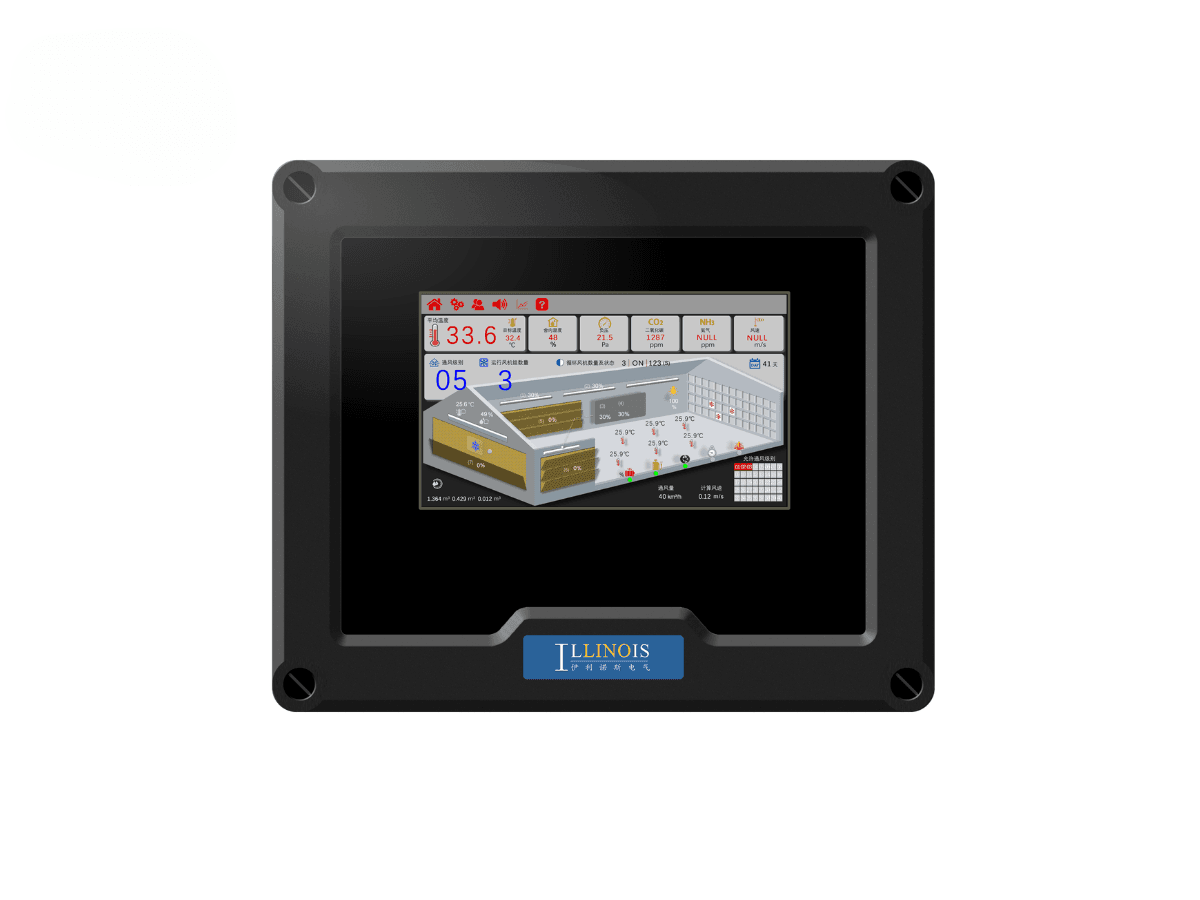
For a defined commercial-house configuration, a 10-inch poultry controller for staged fan-group and inlet control can coordinate multiple fan groups, ventilation stages and air-inlet operation.
This makes it suitable for many large broiler houses and multi-tier poultry applications where several groups of equipment need to operate in sequence.
Larger poultry projects may require a large-house environmental controller for multi-stage tunnel ventilation with wider fan-group, inlet and sensor capacity.
The final controller configuration should be based on the actual project rather than only on model specifications.
During commissioning, each ventilation stage should be tested individually.
Useful measurements include:
· total airflow;
· static pressure;
· temperature difference between house sections;
· bird-level airspeed;
· inlet opening;
· fan operating current.
The fan sequence and inlet positions can then be adjusted to reduce sudden changes between stages.
For high-temperature projects, the control strategy should also consider emergency operation.
Depending on the farm design, high-temperature alarms may be linked with emergency fans, backup power arrangements and staff notifications.
The ventilation system should never depend on one device or one control action when bird safety is at risk.
Fan Maintenance Can Decide Whether Summer Ventilation Works
A well-designed ventilation system can still lose performance if the fans are not maintained.
Dust, feathers and other farm debris can accumulate on blades, shutters and protective screens. This increases resistance and reduces useful airflow.
For belt-driven fans, belt tension and bearing condition also affect fan speed and energy use.
Direct-drive or permanent-magnet EC fan designs reduce some mechanical wear points, but they do not eliminate maintenance requirements.
Before the hottest part of the year, farms should inspect:
· fan blades;
· shutters;
· guards and screens;
· motor condition;
· mounting hardware;
· electrical cables;
· communication wiring;
· operating current;
· unusual vibration or noise.
Cleaning is especially important.
A fan that performed correctly when newly installed may deliver less airflow after long periods of dust accumulation.
For this reason, one of the most useful preparations before summer is a complete poultry ventilation system performance check.
Instead of waiting for a heat wave to reveal a problem, farms can compare current measurements with previous commissioning data and identify performance loss in advance.
Preventive maintenance is usually far easier than trying to repair a critical ventilation problem during extreme weather.
For a broader routine covering alarms, electrical equipment, ventilation devices and abnormal operating signs, use our daily poultry-house inspection checklist for fans, alarms and electrical faults.
Verify the Ventilation System With Field Measurements
Installation should not be considered complete simply because the correct number of fans is mounted on the wall.
A tunnel ventilation system should be tested under different operating stages.
At each stage, the farm or commissioning team should record measurements from several areas of the poultry house.
Useful data include:
· airspeed at bird height;
· static pressure;
· indoor temperature;
· relative humidity;
· fan current;
· inlet opening;
· differences between the front, middle and exhaust end.
These measurements create a performance baseline.
A Thailand broiler tunnel ventilation and automation project provides a practical reference for fan sealing, stage-by-stage commissioning and controller verification.
Later, after fan cleaning, component replacement or system modification, the farm can repeat the same test and compare the results.
If several additional fans are operating but bird-level airflow improves only slightly, the problem may not be fan capacity.
Typical areas to investigate include:
· insufficient inlet area;
· high inlet or shutter resistance;
· leakage through the building;
· accumulated dust;
· fan performance deterioration.
For overseas engineering projects, ventilation proposals should also state the design assumptions clearly.
Important boundary conditions include:
· peak outdoor summer temperature;
· maximum expected bird weight;
· target bird-level airspeed;
· permitted static pressure;
· house dimensions;
· ventilation mode.
Without these parameters, a fan configuration designed for one farm should not be copied directly to another location.
A system that works in a moderate climate may be inadequate for a high-density broiler house in a tropical or desert region.
What Should Poultry Equipment Buyers Check Before Ordering?
For poultry equipment buyers, farm owners and engineering contractors, a complete tunnel ventilation system for broiler houses should be evaluated as a system rather than as a collection of fan products.
Before confirming an order, check whether the supplier can provide:
Fan Performance Information
Ask for airflow and static-pressure performance data rather than only nominal fan diameter.
Project-Specific Fan Grouping
The supplier should consider house dimensions, stocking density, local climate and the required airspeed before recommending fan quantities.
Controller Integration
The environmental controller should be able to coordinate variable-speed fans, fixed-speed fan groups, air inlets and cooling equipment.
Farm-Environment Protection
Fans and controls should be designed for the dust, humidity and corrosion conditions found in poultry houses.
Emergency Ventilation Logic
High-temperature alarms, backup ventilation and emergency operating procedures should be considered before the heat season begins.
The best ventilation system is not necessarily the one with the most fans.
It is the one in which poultry exhaust fans, air inlets, static pressure and automated control work together as one system.
Frequently Asked Questions
Should a hot-climate broiler house use 50-inch or 57-inch cone fans?
The correct choice depends on house size, stocking density, local peak temperatures, required airflow and static pressure.
A 50-inch fan may provide an effective balance for many conventional commercial poultry houses. A 57-inch high-capacity fan is more suitable when very long houses, high heat loads or extreme climates require greater peak exhaust capacity.
The final selection should be based on ventilation calculations rather than fan diameter alone.
Can LINO Touch MAX automatically stage multiple poultry exhaust fans?
Yes. LINO Touch MAX can be configured to manage multiple ventilation stages and different fan groups according to the project.
A typical sequence can use variable-speed fans for base ventilation, introduce fixed-speed fans progressively and activate high-capacity tunnel fans during peak heat conditions.
Air-inlet operation should be coordinated with the fan stages.
Can adding more fans alone solve summer heat stress?
Not reliably.
Additional fan capacity may help, but heat-stress control also depends on inlet area, static pressure, airflow distribution, bird-level airspeed and control logic.
If the ventilation system has excessive resistance or major air leakage, additional fans may not deliver the expected improvement around the birds.
Build the Ventilation System Around Airflow, Not Fan Quantity
A reliable summer broiler ventilation system is not created by maximizing fan quantity.
It comes from matching four elements:
total exhaust airflow + bird-level airspeed + inlet airflow organization + staged environmental control
When these elements work together, the poultry house can maintain more stable airflow during changing weather and production conditions.
For farms operating in Southeast Asia, South America, the Middle East, Central Asia or other hot-climate regions, the correct ventilation configuration should always begin with the poultry house itself.
House dimensions, bird density, summer climate, static pressure and target airspeed should determine the fan and controller configuration—not the other way around.
Planning a Tunnel Ventilation Upgrade for a Broiler House?
If you are upgrading a commercial broiler house for hot-weather operation, send us your house dimensions, bird capacity, existing fan layout, inlet configuration and local summer conditions.
Our technical team can evaluate the ventilation requirements and recommend a system configuration using 50-inch or 57-inch poultry cone fans, LINO Touch MAX or LN-9900 staged environmental control according to the project requirements.
Before selecting a model, review how to compare poultry exhaust fans at operating pressure.
Discuss Your Poultry Ventilation Requirements
Product Categories
Recommended Products
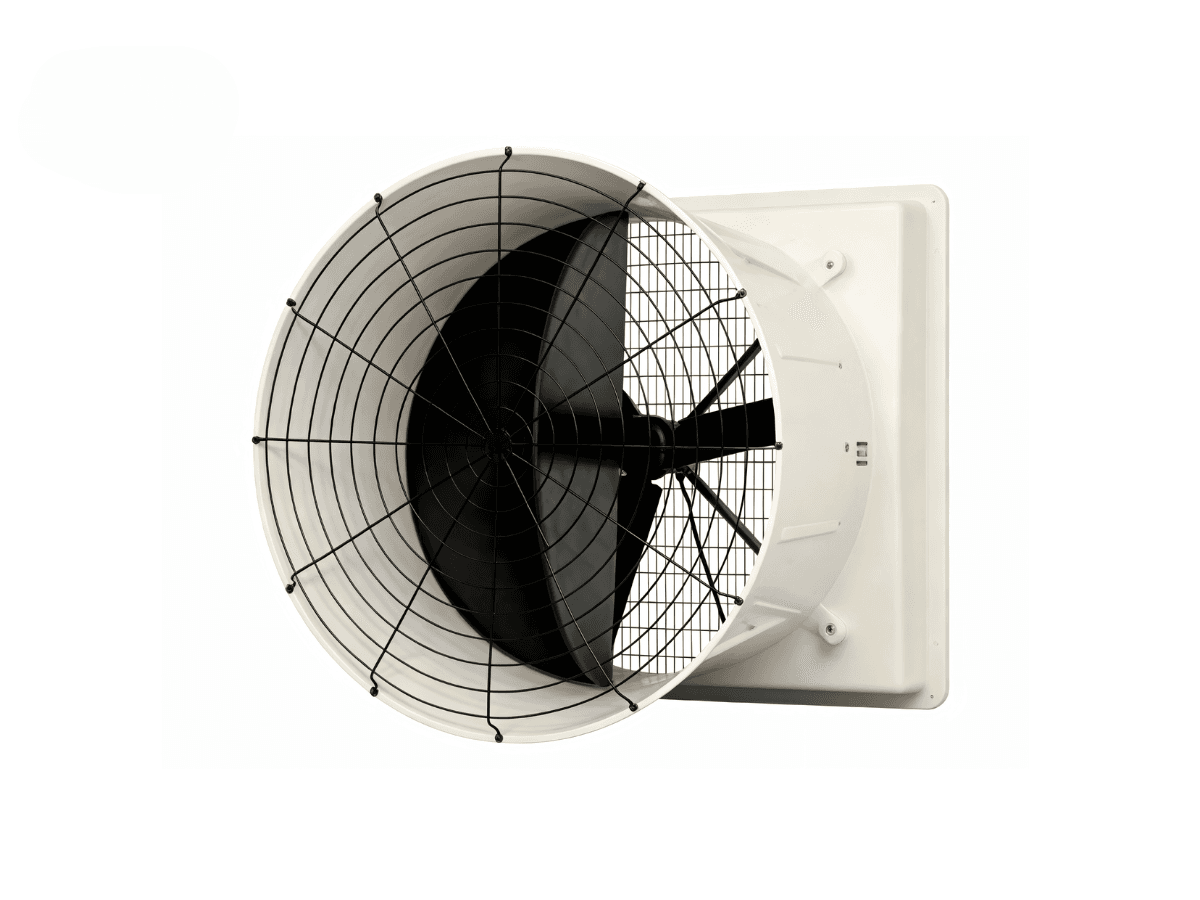
50-inch Butterfly Cone Ventilation Fan with PM Motor for Livestock and Poultry Farms
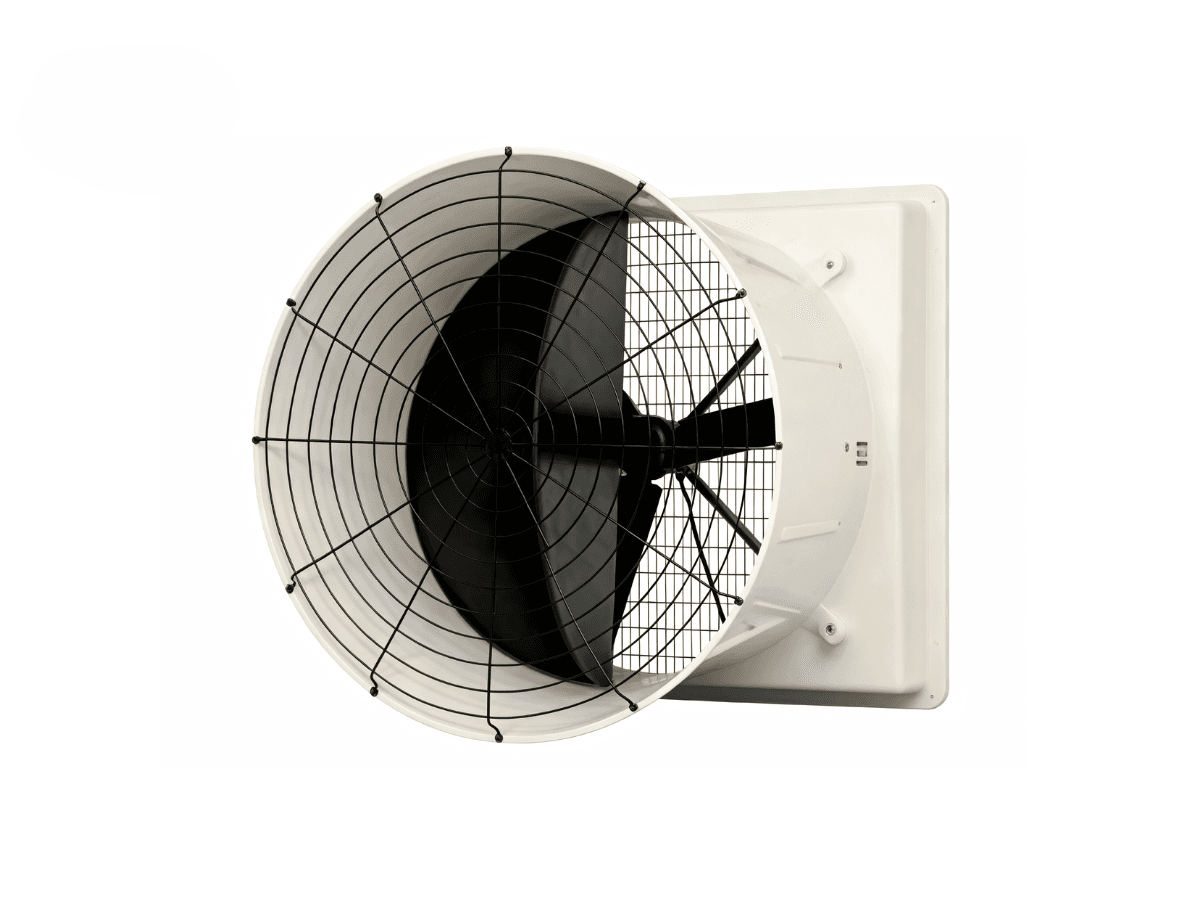
57-inch High-Capacity Butterfly Cone Ventilation Fan with PM Motor for Livestock and Poultry Farms
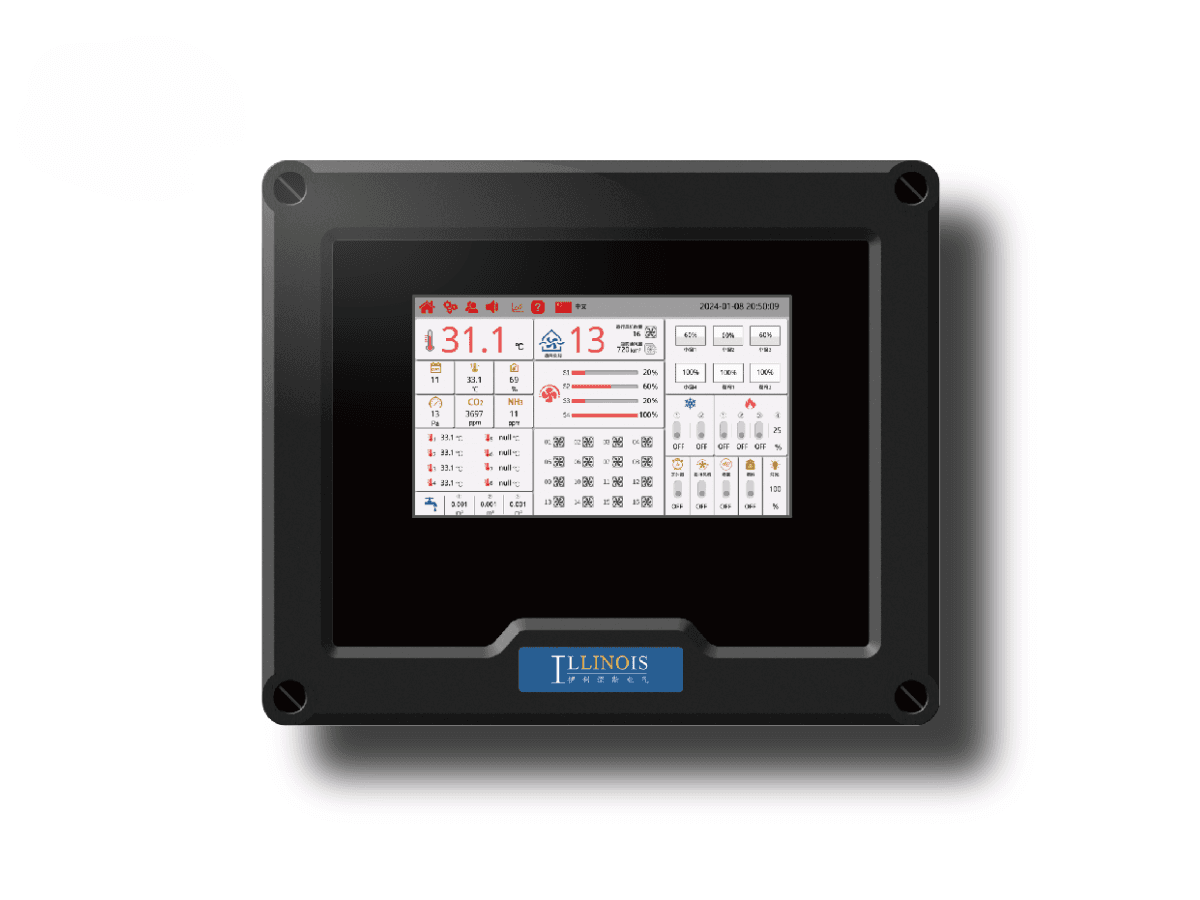
LINO Touch MAX Intelligent Poultry Environmental Controller