Ontario Layer Farm Visit: Right-Sized Automation Lessons From Ross Enterprises
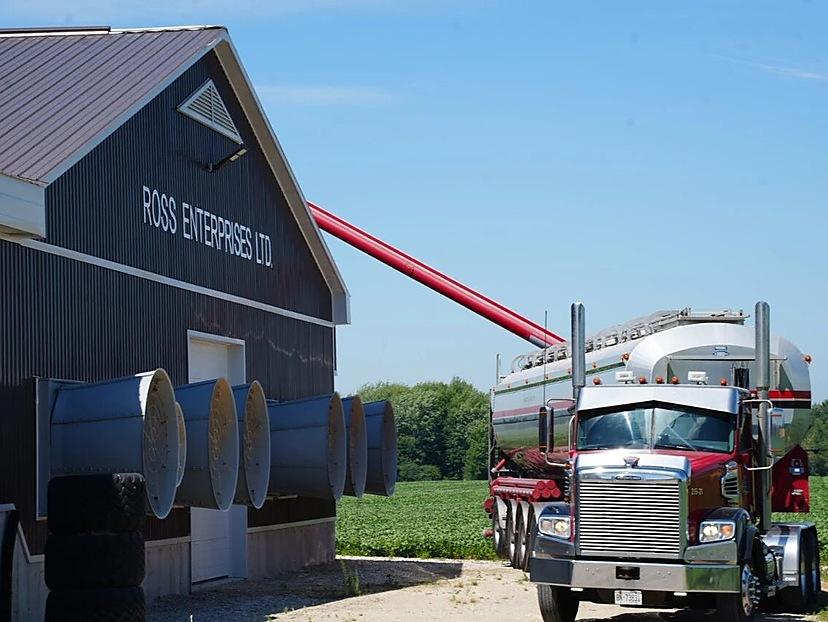
Field visit note: This article is based on observations and information recorded during an on-site industry visit to Ross Enterprises Ltd. in Ontario, Canada. Farm-specific production figures reflect information recorded at that time. The visiting team and the source of each material farm-specific claim are identified where relevant.
Ontario is an important agricultural region, but the value of this visit was not the size of the province's egg industry. It was the operating discipline of a family-run layer farm developed across five generations. Ross Enterprises Ltd. offers a useful reference for producers considering how far automation should go, and where simplicity, maintenance and local operating knowledge still matter.
Why This Ontario Layer Farm Visit Matters
For small and medium layer producers in other markets, Ross Enterprises shows what can happen when long-term management, control of basic inputs and appropriately scaled equipment are put ahead of expansion for its own sake. It is not a mega-farm, and that is exactly why the visit was useful.
Five Generations of Farm Management
The farm did not arrive at its current model all at once. The first and second generations focused mainly on grain production and poultry. The third generation obtained local layer-production quota and built a commercial egg operation. The fourth generation expanded the business and added free-range turkey production and broader field cropping. More recently, younger fifth-generation family members have introduced digital management tools and modern animal-welfare practices. The family's long involvement in egg farming is documented in its profile with Egg Farmers of Canada.
Today the farm operates across several connected activities: laying hens, free-range turkeys, corn, soybeans and wheat, sales of egg and turkey products, and agritourism. That mix matters. A diversified farm is less exposed to a single source of revenue, and decisions in one part of the business can support another rather than standing alone.
What We Observed at Ross Enterprises
One of the clearest impressions from the visit was how much continuity shapes day-to-day management. Family members and employees have defined roles, and the business is not constantly changing direction with every short-term market movement. In livestock production, that kind of consistency is easy to underestimate. Equipment, feeding, biosecurity and flock management all work better when operating rules remain clear from one cycle to the next.
The second feature is the farm's crop-livestock loop. Grain grown on its own land is used as the basis for poultry feed, while manure is returned to the fields. This crop-to-feed arrangement reduces part of the farm's dependence on outside raw-material supply and gives the team tighter control over feed inputs. It cannot remove every price risk, but it does soften one of the pressures that many independent farms struggle with when feed costs rise.
Biosecurity is treated with the same practical discipline. The farm has dedicated procedures and assigned responsibility rather than treating hygiene as an informal task shared by everyone. Solar generation and other environmental measures are also part of the operation. The farm team stays connected with the wider Canadian egg sector through industry programmes, including youth leadership activities, which keeps new management ideas moving into the business rather than stopping at the farm gate.
What Can and Cannot Be Copied in Other Markets
Canada's egg sector operates under a quota-management system, and Ross Enterprises benefits from production quota held across generations. That gives the business a degree of stability that farms in many other countries do not have. Its land base is another advantage because home-grown crops reduce dependence on purchased feed ingredients.
Those conditions cannot simply be copied elsewhere, and it would be misleading to suggest they can. A farm in Southeast Asia, Central Asia, the Middle East or Africa may have a completely different policy environment, feed supply chain and land structure. Ontario has a well-established egg sector within Canada's agricultural economy, but its quota system, land base and feed supply chain cannot be copied directly.
What can be copied is the operating logic: control the risks that are actually controllable, keep basic production routines disciplined, and invest where an improvement solves a real problem. The crop-to-feed arrangement also supports tighter control over raw-material quality and consistency, which is valuable in any layer operation even when the exact supply model is different.
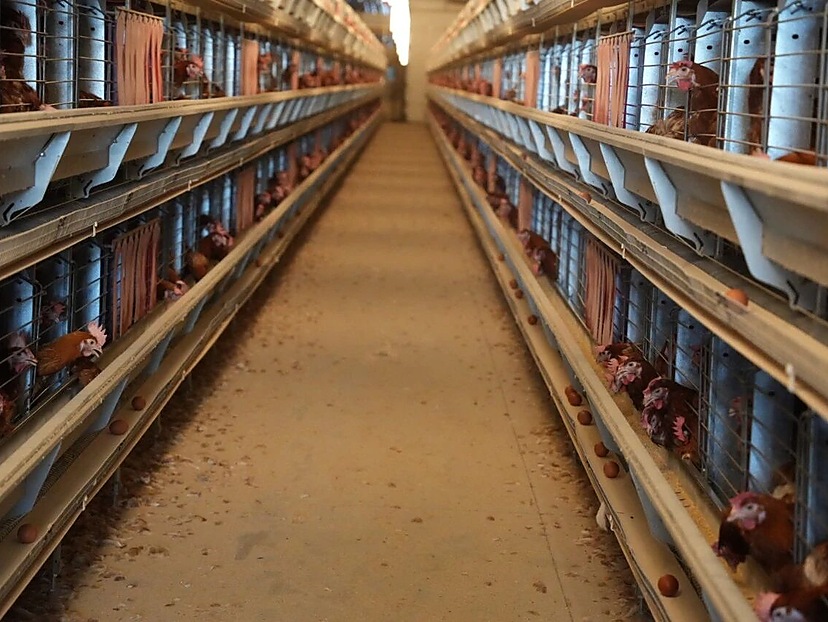
Layer-house equipment observed during the visit to Ross Enterprises in Ontario.
What Right-Sized Automation Means for a Layer Farm
Product relevance note: This article documents an industry visit rather than an Illinois Electric installation case. The product examples below show how the operating needs observed during the visit relate to our portfolio; they do not state that Ross Enterprises uses or endorses these products.
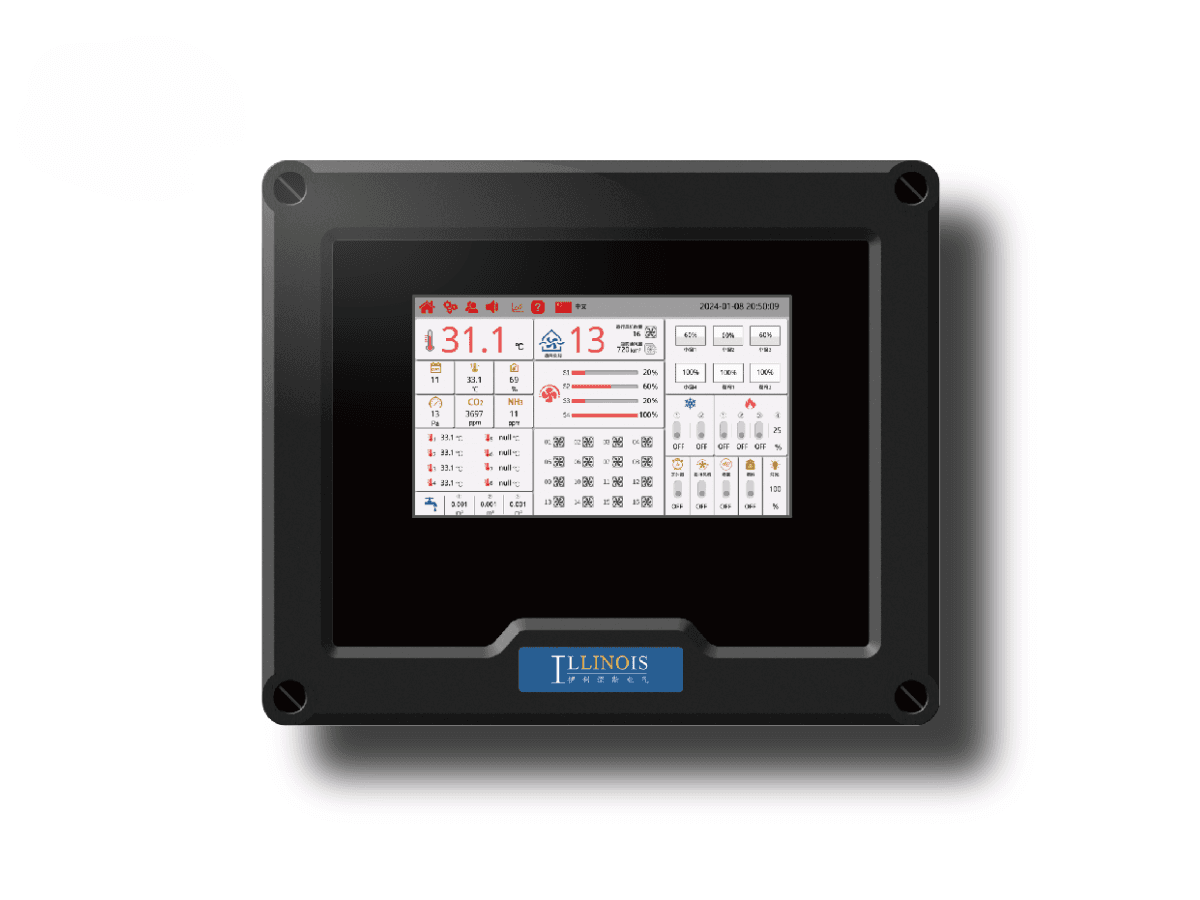
Right-sized automation starts with the operating problem, not the product catalogue. For a layer farm, the relevant questions are how many fan groups, air inlets, sensors, relay outputs and variable-speed channels must be coordinated, how alarms and manual fallback will work, and whether the system needs room for future expansion.
North American family farms at this scale do not necessarily want the most complicated automation package available. The requirements we observed were much more practical: stable operation, simple maintenance and equipment that fits the farm rather than forcing the farm to change around the equipment.
For a family-run farm, maintainability is part of the buying decision. A controller or counter may offer an impressive list of functions, but those functions add little value if routine staff cannot use them confidently or if basic service becomes difficult. The better fit is equipment that solves a defined task, can be checked locally and still leaves the farm with a clear manual operating route when needed.
Which Controller Scale Fits a Family-Run Layer Farm?
Farm capacity alone cannot determine the correct controller. Final selection should be based on the number of fans, fan groups, air inlets, sensors, relay outputs, variable-speed channels, alarms, communication requirements and future expansion plans.
| Project Requirement | Relevant Controller Family | Selection Logic |
|---|---|---|
| Small single-house project with basic staged ventilation | compact environmental controller for small poultry and pig houses | Suitable when the number of fan groups, air inlets and relay outputs is limited |
| Moderate control requirements with upgraded variable-speed functions | upgraded poultry controller for moderate ventilation and sensor requirements | Balances upgraded ventilation control with a more compact I/O configuration |
| Modern medium-sized layer house requiring broader climate coordination | modern touchscreen controller for medium-sized layer-house climate control | Primary reference for projects requiring more ventilation stages, fan groups, air inlets and relay outputs |
| Phased expansion, OEM integration or higher I/O demand | modular poultry controller for phased expansion and higher I/O demand | Modular architecture supports more complex or gradually expanding projects |
| Large multi-zone or centralized poultry-house control | large-scale poultry environmental controller for multi-zone ventilation management | Relevant when the project requires substantially more fan groups, inlet groups or system expansion |
This matrix is a selection reference, not a statement that Ross Enterprises operates any of these systems. For a deeper look at the environmental-control knowledge behind these choices, see our layer-house environmental control guide for stable commercial egg production.
Ventilation, Egg Counting and Feed Visibility
Ventilation is one example. Smooth speed adjustment can reduce the sharp environmental changes caused by repeated full-speed fan starts and stops. Variable-speed ventilation can help a compatible environmental controller adjust fan demand more smoothly, but the final result still depends on fan performance, inlet management, static pressure, house leakage and commissioning. The motor or controller alone cannot guarantee uniform bird-level airflow. For retrofit and control-integration details, see our demand-based EC fan control for poultry-house ventilation.
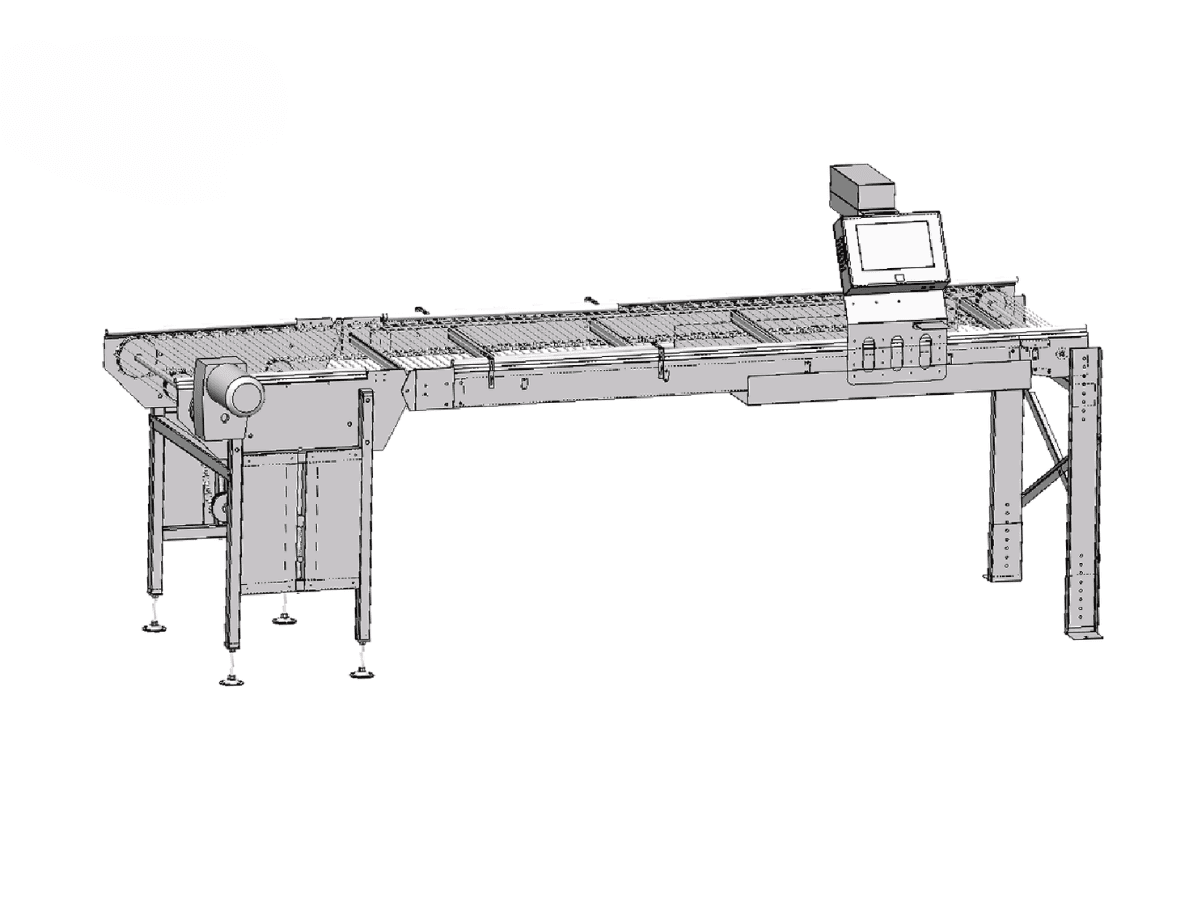
Egg collection is another. Machine-vision egg counting can reduce manual tallying and improve production records when the camera position, belt conditions, lighting, cleaning routine and data mapping are properly managed. This is the idea behind a machine-vision egg counting system for layer-farm production records.
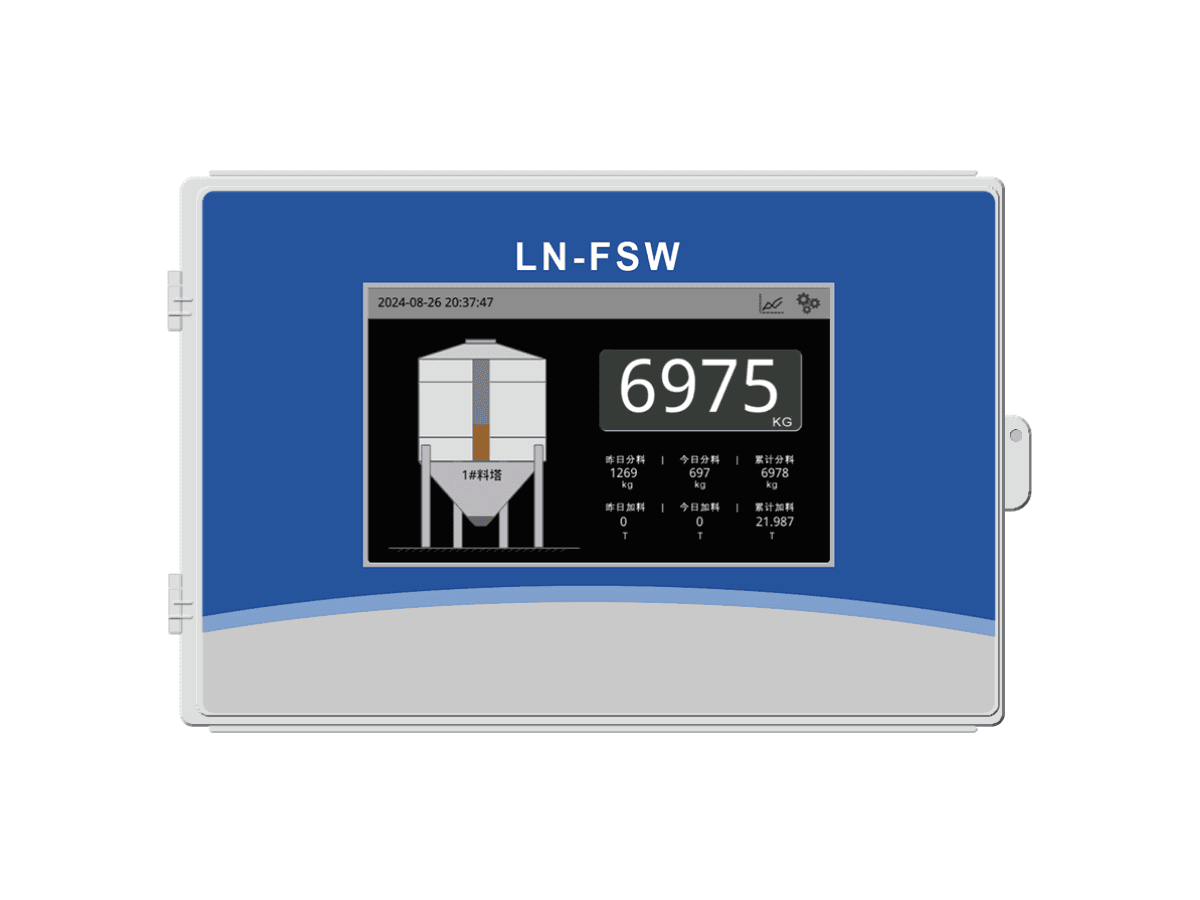
For farms storing their own feed, silo weighing provides direct inventory information instead of relying on rough visual estimates. Continuous silo weighing can support inventory and purchasing decisions, but reliable data still depends on the silo load path, sensor installation, zero verification and correct silo identification. This is the role of a continuous feed-silo weighing system for layer-farm inventory monitoring.
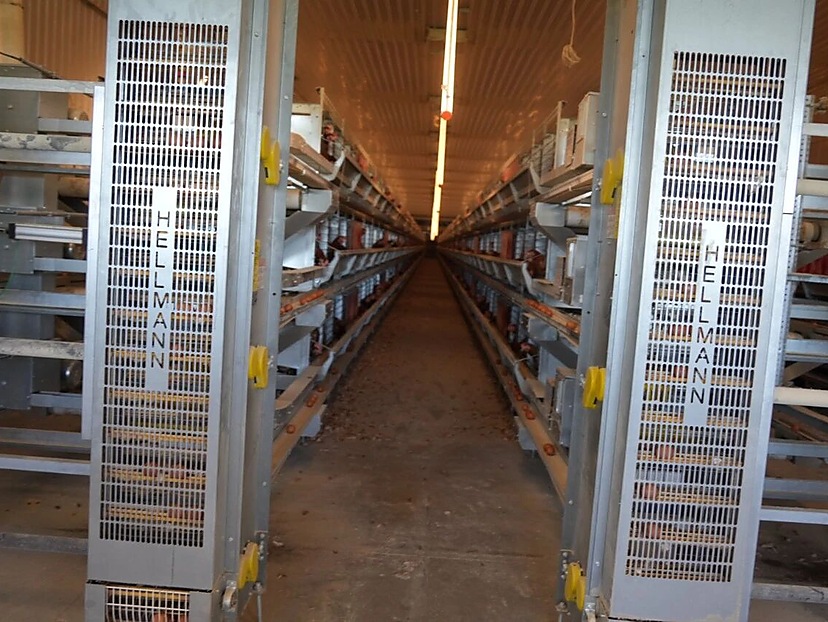
Farm infrastructure documented during the Ontario industry visit.
Practical Lessons for Layer Farms Outside Canada
The strongest takeaway from the visit was not a piece of equipment. It was the idea that a layer farm can improve without constantly increasing flock size. Long-term management, a crop-and-livestock cycle, strong biosecurity, orderly housing and routine management, and right-sized automation can all improve the value of the existing operation before another house is built.
The Ontario quota system, land base and feed supply chain cannot be copied directly in other markets. The transferable lesson is operational discipline: identify where the farm repeatedly loses time, energy, feed visibility or production data, then select the smallest maintainable system that solves those problems without closing off future expansion.
· Protect continuity. Clear roles, consistent biosecurity and repeatable operating procedures are worth more than frequent changes made in response to short-term market noise.
· Control the inputs you realistically can. Not every farm owns cropland, but every farm can look for ways to reduce supply-chain exposure and improve visibility over feed, labour and production data.
· Keep automation proportional to the farm. A stable climate controller, variable-speed ventilation, reliable egg counting or feed weighing can be valuable when it solves a specific problem. Complexity on its own is not a productivity strategy.
Frequently Asked Questions
Is Ross Enterprises' advantage mainly its flock size?
No. The value of the farm as a reference comes from long-term management, crop-to-feed integration, biosecurity, production discipline and proportionate investment, not flock size alone.
What can farms outside Canada learn from this model?
Land ownership, quota and market conditions are location-specific. Farms elsewhere can still apply the operating principles: control measurable risks, keep maintenance practical, improve production records and invest only where automation solves a recurring problem.
How should a layer farm select an environmental controller?
Selection should be based on the required fan groups, air inlets, sensors, relay outputs, variable-speed channels, alarms, communication interfaces, local service conditions and future expansion—not bird capacity alone.
Does Ross Enterprises use Illinois Electric equipment?
This article documents an industry visit. Unless a specific installation is separately identified and confirmed, the products discussed are presented as relevant solution examples rather than equipment installed or endorsed by Ross Enterprises.
What information is needed to configure a layer-farm control system?
Buyers should provide the house dimensions, bird capacity, cage layout, existing fans and air inlets, sensor requirements, supply voltage, required alarms, communication or network conditions, maintenance capacity and future expansion plan.
Discuss a Right-Sized Layer Farm Control System
Share your house dimensions, bird capacity, cage layout, existing fans and air inlets, sensor requirements, supply voltage, alarm requirements, network conditions and future expansion plan. We can compare the appropriate LINO Touch or LN-9900 configuration against the project's actual I/O and ventilation requirements.