Poultry Climate Control Solutions for Tropical Southeast Asian Farms | Livestock Philippines 2026
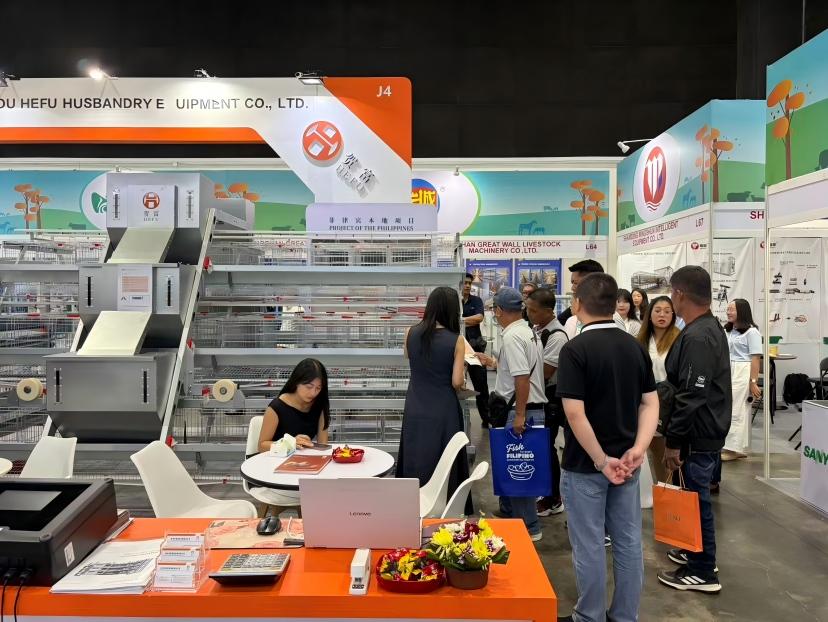
Kicking off on June 24 at the World Trade Center Metro Manila, Livestock Philippines 2026 has officially wrapped up its three-day exhibition. As the most influential and professional livestock, poultry and aquaculture trade show in the Philippines, this annual event gathers farm owners, local distributors, large-scale farming groups and industry solution providers across Southeast Asia.
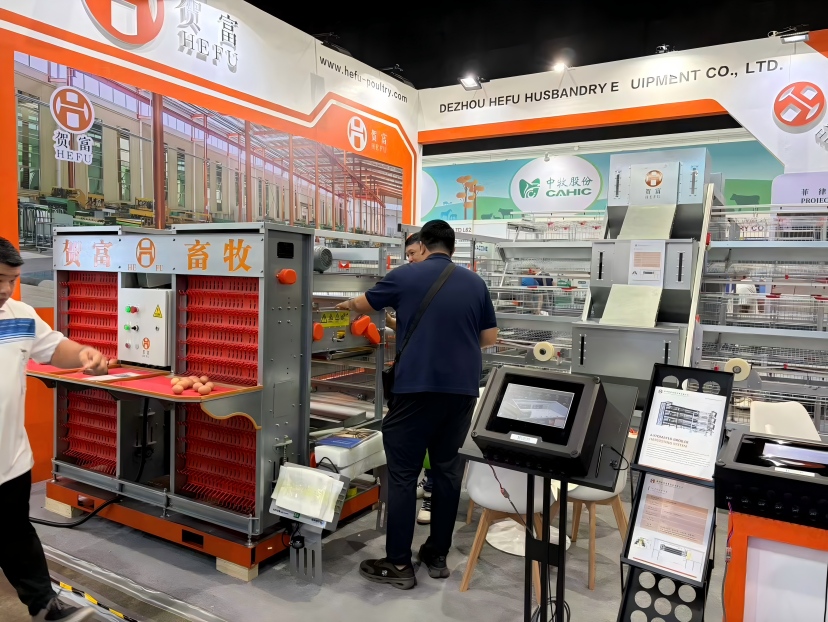
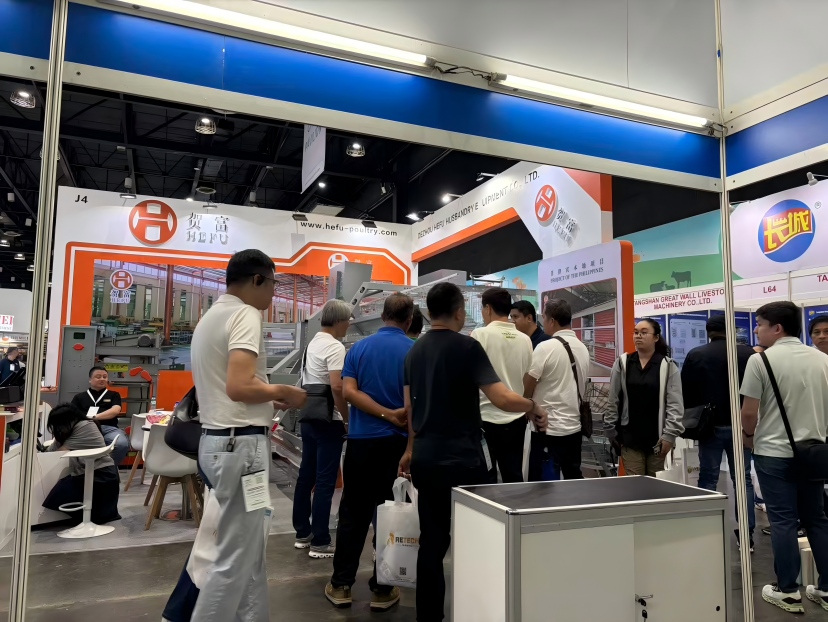
Fresh off our successful participation in Indo Livestock 2026 in Indonesia earlier this month, our team returned to the Southeast Asian market once again. We brought our full lineup oftropical-adapted poultry climate control systems, energy-saving EC ventilation fans and smart environmental control equipment to the Manila show. Talking face-to-face with dozens of industry visitors from the Philippines, Indonesia, Vietnam, Malaysia and other regional countries, we gained firsthand insights into the actual upgrade demands and pain points of local poultry farming, further solidifying our market layout in Southeast Asia.
Unlike the mature, large-scale farming systems in China, the Southeast Asian livestock industry is currently in a critical transformation stage. Most local farms are actively phasing out outdated, high-energy-consumption equipment and upgrading traditional manual farming modes to automated, efficient production systems. Instead of simply introducing technical parameters at the exhibition, we focused on real-world problem-solving. Through one-on-one in-depth consultations, on-site working condition simulations and practical case sharing, we addressed the most common challenges local farmers face every day, including heat-induced production drops, excessive energy costs, fragile equipment performance and complicated operation processes. All these on-site conversations have helped us understand the local market far more practically and precisely.
Expanding Footprint in Southeast Asia: Building Localized Market Partnerships
Southeast Asia is the core hub of tropical livestock farming worldwide, with poultry and pig breeding serving as the backbone of regional agricultural economy. Driven by year-round high temperature and high humidity, the local breeding industry keeps expanding steadily. However, most farms here have long been troubled by backward environmental control equipment. Conventional farming fans and cooling devices feature high power consumption, poor tropical adaptability and high failure rates, seriously restricting farming efficiency and profit growth. This makes Southeast Asia one of the most promising incremental markets for professional Chinese livestock equipment manufacturers.
In 2026, we have accelerated our localized and refined layout across Southeast Asia, focusing on two core markets: Indonesia and the Philippines. The Indonesian market is dominated by large-scale, standardized breeding bases that pursue high-intelligence integrated solutions. In contrast, the Philippine market shows obvious dual development characteristics: large industrial farming groups are upgrading their systematic equipment, while a huge number of small and medium-sized family farms are seeking cost-effective automated renovation solutions, bringing more diverse and segmented market demands.
During Livestock Philippines 2026, our key visitors fell into three categories: veteran local farm owners in the Philippines, cross-border livestock equipment distributors covering Southeast Asia, and investors of newly built standardized farming projects. Many returning customers shared genuine feedback on their equipment usage troubles. Most general fans and climate control devices from European, American and local Philippine brands are designed for temperate climates, not tropical conditions. When running in year-round hot, humid and salt-laden environments, these ordinary devices easily rust, suffer from burned-out motors, and fail to deliver stable cooling effects after just a few months of operation.
Meanwhile, numerous local distributors clearly pointed out that the Southeast Asian market is no longer chasing low-cost, generic equipment. What local farmers and partners truly need is tropical-adapted, energy-efficient, durable equipment with reliable after-sales support and customizable solutions — exactly the core advantages we have been focusing on for years. By the first day of the exhibition alone, we received over 100 professional industry visitors, collected dozens of customized solution demands, and reached preliminary long-term cooperation intentions with multiple local Philippine distributors, greatly advancing our localized channel construction in Southeast Asia.
Core Pain Points of Southeast Asian Poultry Farming (Verified On-Site)
Combining our on-site communication during this exhibition, years of practical project experience in Southeast Asia, and the latest development status of the Philippine livestock industry in 2026, we have summarized three typical and prominent pain points of local poultry farming. These regional challenges are completely different from domestic farming scenarios and are the top priorities for local buyers when selecting farming equipment.
1. Severe Poultry Heat Stress Caused by Extreme Tropical Heat and Humidity
Countries like the Philippines and Indonesia feature a typical tropical rainforest climate, with annual average humidity exceeding 70%. In summer, the ambient temperature often hits 35°C, and extreme El Niño weather frequently pushes the internal temperature of poultry houses above 38°C, creating a high-risk environment for poultry heat stress. Industry data shows that extreme high temperatures cause billions of pesos in economic losses to the Philippine livestock industry every year.
Farm managers from large-scale breeding enterprises told us the most prevalent problem: ordinary ventilation fans only produce superficial air circulation, failing to eliminate accumulated heat and moisture inside the chicken house. Under high temperature and high humidity conditions, poultry drink more water and eat less feed, directly leading to reduced egg production in layers and slow weight gain in broilers. In severe cases, mass poultry death occurs. Moreover, humid and sultry environments easily breed bacteria and trigger respiratory diseases, raising veterinary costs and overall farming mortality.
In addition, conventional local equipment lacks anti-corrosion treatment. Long-term exposure to humid and salt-spray tropical environments causes rusting, jamming and short-circuit failures in just half a year, resulting in extremely short service life. Therefore, local farmers’ core demand is clear: they need equipment that can withstand high temperatures and corrosion, deliver large and uniform air volume, and fundamentally relieve poultry heat stress to reduce farming losses.
2. High and Unstable Power Costs Force Strict Energy-Saving Demands
Energy cost ranks second only to feed cost in Southeast Asian poultry farming operations, with feed expenses already accounting for 60% to 70% of total breeding costs. Sky-high local electricity prices further squeeze farming profits. Many regions in the Philippines and Indonesia suffer from unstable grid voltage and frequent voltage fluctuations, while most old farms still use traditional fixed-speed AC fans that run at full speed all day without adjustable operating modes, resulting in huge unnecessary power consumption and soaring monthly electricity bills.
Almost all large farming groups emphasized this pain point during our on-site talks. Traditional fans cannot adjust air volume according to real-time house temperature or poultry density, leading to serious energy waste day and night. Worse still, unstable grid voltage often burns out fan motors and causes sudden equipment shutdowns. Frequent failures not only increase maintenance costs but also cause sharp fluctuations in the internal environment of poultry houses, seriously affecting poultry health and survival rate.
Local buyers’ purchasing logic has changed significantly in recent years. They no longer prioritize low equipment prices. Instead, they prefer cost-effective, energy-saving and grid-stable equipment that can reduce long-term operating costs and failure rates, bringing sustainable profit growth to farms.
3. Shortage of Professional Technicians Leads to High Requirements for Easy Operation and Reliable After-Sales Service
The entire Southeast Asian livestock industry is facing a shortage of professional breeding and technical personnel. Most workers on small and medium-sized local farms only master basic feeding work and lack professional skills in equipment debugging and daily maintenance. Most imported climate control devices on the market are equipped with complex full-English parameter systems, which are too difficult for local workers to operate proficiently.
In addition, most overseas brands have slow after-sales response in Southeast Asia, with difficult spare parts procurement and long maintenance cycles. Once the equipment breaks down, farms often have to wait for weeks for repairs, which easily triggers large-scale breeding losses. Therefore, local farmers hold very practical demands for equipment: simple and intelligent automatic operation, minimal manual intervention, timely fault early warning, fast after-sales response and accessible spare parts supply. They also hope suppliers can provide free installation guidance and professional technical training adapted to local workers’ operating habits.
Customized Tropical Farming Solutions: Targeted Hardware and System Upgrades
To solve the three core pain points of Southeast Asian tropical farming, we abandoned generic one-size-fits-all equipment design. Based on years of overseas project implementation experience, we have developed a complete set of poultry temperature and ventilation solutions exclusively tailored for Southeast Asian tropical climates, local power grid conditions and human operation habits. These targeted solutions are highly compatible with the actual farming scenarios in the Philippines, Indonesia and other Southeast Asian countries, which is the key reason why we gained wide recognition at this exhibition.
1. Tropical Anti-Corrosion EC Variable-Speed Fans: Eliminate Heat Stress and Adapt to Harsh Environments
Our EC energy-saving fans driven by 1.5KW HNRK160 EC motors are specially developed for extreme tropical working conditions, solving the defects of poor cooling performance and short service life of ordinary fans. Equipped with fully enclosed waterproof and anti-corrosion motors and professional rust-proof and salt-spray resistant coatings, our fans can operate stably for a long time in high-temperature, high-humidity and salt-laden harsh environments, effectively avoiding common failures such as rusting, short circuits and jams, and greatly extending equipment service life.
Matched with low-resistance and large-air-volume fan blades and scientific indoor air circulation logic, the equipment can quickly replace high-temperature, humid and polluted air inside poultry houses, realizing overall uniform cooling and dehumidification. It effectively reduces poultry heat stress, stabilizes egg production and broiler weight gain, and cuts down disease-induced farming losses.
Most importantly, the intelligent EC variable-frequency system can automatically adjust fan speed and air volume according to real-time indoor temperature and humidity, eliminating 24-hour full-load idle operation. Compared with traditional fixed-speed fans, our EC fans reduce power consumption by more than 30%, perfectly solving the problem of high local electricity costs. Meanwhile, the wide voltage adaptation range enables the equipment to adapt to unstable local power grids, avoiding motor burnout and sudden shutdowns caused by voltage fluctuations, and greatly improving operational stability.
2. Multi-Language Intelligent Integrated Climate Control System: Simplify Operation and Reduce Manual Costs
To solve the problem of insufficient local technical personnel and complex equipment operation, we have completed in-depth localized optimization for our intelligent environmental control system. The system supports multi-language switching including English, Filipino and Indonesian, with an intuitive and concise operation interface that removes complicated professional parameter settings. Local farm workers can master basic operations after simple training, with no professional technical threshold required.
The system monitors indoor temperature, humidity and air quality 24 hours a day, and automatically links fans, compatible cooling systems and other equipment to start, stop and adjust speed through the LINO Touch MAX climate controller, realizing fully automatic constant temperature and humidity ventilation without frequent manual on-site duty, greatly saving labor costs for farms.
Equipped with mobile remote monitoring and intelligent fault early warning functions, farmers can check real-time equipment operating status and indoor environmental data anytime and anywhere. The system will automatically push abnormal reminders to avoid unexpected shutdown losses in advance. This function perfectly makes up for the shortcomings of slow after-sales response and untimely fault handling in the local market, meeting the intelligent upgrading needs of both small family farms and large industrial breeding bases.
3. Customized Solutions + Localized After-Sales Service: Cover All Farm Scales
The Southeast Asian farming market is highly stratified, ranging from large-scale ten-thousand-level breeding bases to small family farms. Standardized universal solutions cannot meet the differentiated upgrading needs of different scenarios. For this reason, we provide free one-on-one customized solution design services. We formulate exclusive ventilation and cooling equipment matching schemes according to customers’ actual chicken house size, breeding category, farm scale, local climate characteristics and power grid conditions.
This customized model effectively avoids equipment redundancy, energy waste or insufficient cooling effect, perfectly adapting to both old farm renovation and new farm supporting construction, and helping customers control renovation costs to the greatest extent.
In terms of after-sales service that local customers care most about, we are constantly improving our Southeast Asian localized service system. We have established cooperative service outlets and spare parts warehouses in core markets such as the Philippines and Indonesia, ensuring fast spare parts supply, rapid fault response and regular on-site technical guidance. We provide full-process technical support including installation and commissioning, daily maintenance and operational training, forming a closed-loop service system from equipment delivery and on-site installation to later operation and maintenance, completely eliminating overseas customers’ after-sales worries.
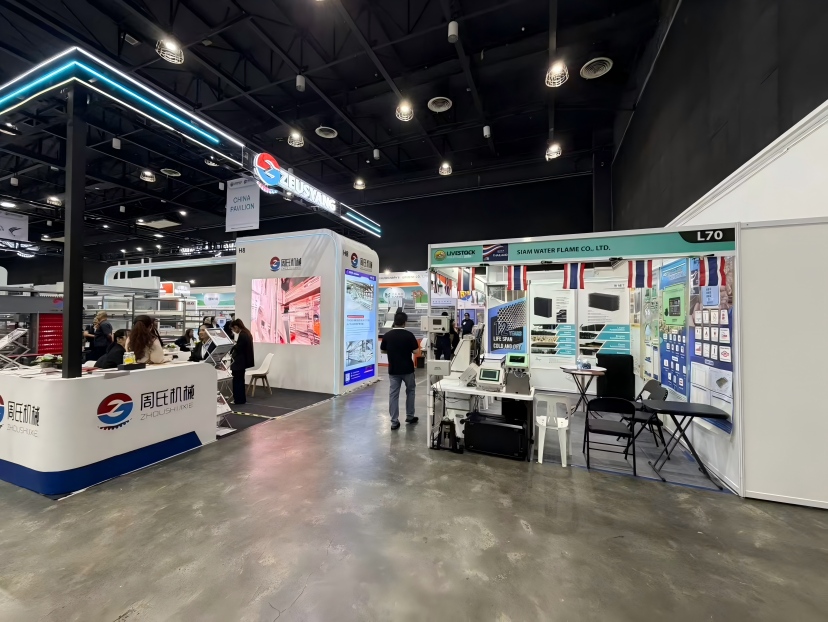
Our participation in Livestock Philippines 2026 has further verified our market positioning: in the Southeast Asian livestock equipment market, low prices can never form core competitiveness. The most valuable advantage lies in providing professional solutions that fit local climates, adapt to actual farming working conditions, solve real pain points and support complete after-sales services.
From Indonesia’s Indo Livestock Expo to the Philippines’ Livestock Show, we have always adhered to the development philosophy ofno generic equipment, only tropical customized solutions. We keep rooted in the front line of the overseas market, listen to farmers’ real demands, and iterate our products and services continuously according to local market changes.
The exhibition has ended, but our cooperation and market exploration never stop. In the next stage, our team will follow up with all intentioned customers one by one, providing exclusive customized solutions and quotation plans. At the same time, we will continue to optimize our localized product system and improve channel and after-sales layout in Southeast Asia. With more professional and tropical-adapted intelligent climate control and ventilation equipment, we will help local poultry farms reduce costs and improve efficiency, empower the intelligent upgrading of Southeast Asian livestock industry, and further expand our brand influence and market share in Southeast Asia.
Related Guides & Projects
For real-world application references, see our project case studies such as Big Dutchman ventilation and climate control partnership.
For more on tropical ventilation, continue reading our related guide on Indonesia broiler farm ventilation project.