Smart Poultry Feeding System for Malaysia Farms
For commercial poultry farms in Malaysia, feeding management is closely connected to climate control.
Daytime temperatures can remain between 32°C and 36°C, while relative humidity frequently exceeds 80%. In hot, still environments near oil-palm production areas, feed can absorb moisture, form lumps and deteriorate quickly. At the same time, heat stress reduces bird appetite, making fixed feeding schedules less suitable for daily farm operation.
Manual feeding creates further uncertainty. Feeding times and quantities depend heavily on operator experience and may not match the needs of different bird ages, stocking densities or changing house temperatures. Large feed deliveries during the hottest hours can remain in the pans for too long, increasing feed deterioration and reducing intake.
To address these challenges, our team implemented a smart poultry farm automation solution for a commercial project in Malaysia. The system combined moisture-resistant feed storage, automatic pan feeding, silo inventory monitoring, automatic bird weighing, environmental control, electrical panels and remote farm management.
The objective was not simply to automate feed delivery. It was to create a tropical poultry precision feeding system in which feed storage, feeding schedules, bird growth data and poultry-house conditions could support one another.
1. Why Poultry Feeding Is More Difficult in Malaysia’s Tropical Climate
Malaysia’s high temperatures and humidity affect both feed quality and bird behaviour.
In open and semi-closed poultry houses, feed is continually exposed to moist air. Once feed absorbs moisture, it may clump inside storage and conveying equipment or remain in feeding pans longer than expected. This creates a greater risk of deterioration, especially when large quantities are delivered at one time.
Heat also changes feeding patterns. During high-temperature periods, birds generally eat less and may avoid feed that has remained exposed inside the house. A conventional timer-based system cannot respond to this change because it continues operating according to the same schedule regardless of poultry-house conditions.
The project therefore required a poultry feeding system for hot and humid climates, rather than a standard automatic feeder.
Labour availability was another important consideration. Large farms need staff to check silo levels, distribute feed, adjust feeding times, remove residues and inspect equipment. As agricultural labour costs increase, repeated manual work becomes more difficult to maintain across several poultry houses.
The customer wanted a low-labour poultry farm automation system that could reduce routine inspection while keeping operating information visible to local staff.
Our solution was developed around five objectives:
· more accurate feed delivery;
· moisture and mold risk reduction;
· feeding and climate-control coordination;
· remote data visibility;
· reduced dependence on manual feeding.
These objectives established the foundation for the complete Malaysia poultry farm automation solution.
2. Four Feeding Problems Found in Traditional Poultry Farms
Before configuring the equipment, the project team identified four recurring feeding-management problems.
Feed damage caused by heat and humidity
Loose feed exposed to humid air can absorb moisture, form lumps and support mold growth. When workers place too much feed into pans at one time, unused feed may remain inside the house and deteriorate before birds consume it.
The project therefore required a poultry feed moisture control solution that addressed storage, delivery and residual feed together.
Inconsistent manual feeding
Manual feeding cannot always adjust accurately to bird age, house temperature and stocking density. Underfeeding during brooding, overfeeding during later stages and excessive feeding during hot periods may contribute to uneven body weights and lower flock uniformity.
High dependence on farm labour
Traditional feeding requires scheduled manual work, feed-level inspections, residue removal and repeated equipment checks. Human error can also lead to differences between poultry houses or shifts.
An automatic poultry feeding system was therefore needed to standardize feeding frequency and quantity.
Feeding and climate systems operating separately
On many farms, feeding equipment continues running on a fixed schedule even when the house becomes too hot or humid. This can increase residual feed and worsen heat-stress-related intake problems.
For this project, feeding was designed as part of an integrated poultry climate and feeding system. Feed delivery, environmental conditions and bird-growth information were brought into one management process rather than being treated as unrelated functions.
3. Moisture-Resistant Feed Storage and Automatic Precision Feeding
The first part of the system addressed feed protection before the feed entered the poultry house.
Moisture-resistant feed silo system
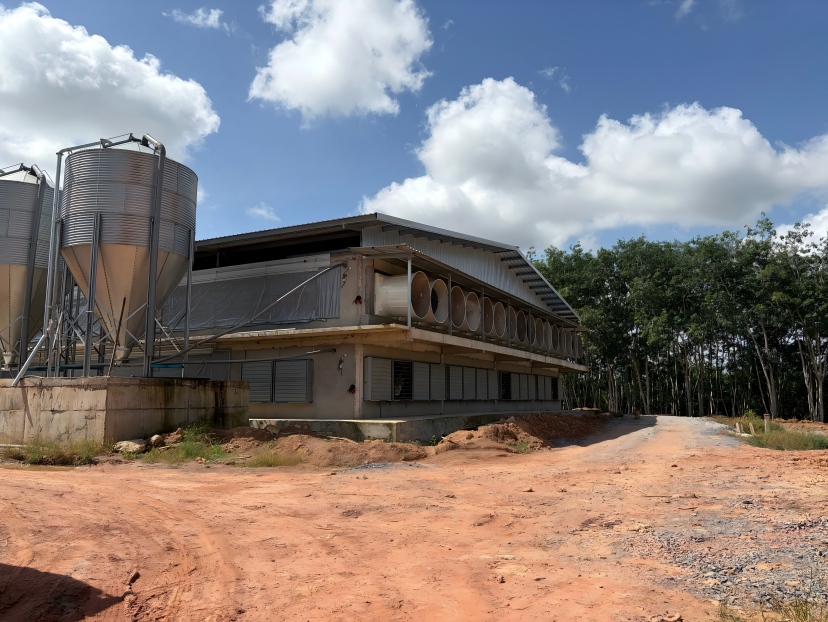
The project used customized galvanized feed silos monitored by a feed silo weighing system designed for humid and mildly corrosive environments. Thicker hot-dip galvanized panels and improved sealing helped reduce exposure to moisture, condensation and poultry-house ammonia.
The upper silo structure included ventilation and moisture-management measures, while an anti-bridging device at the lower section helped reduce feed clumping.
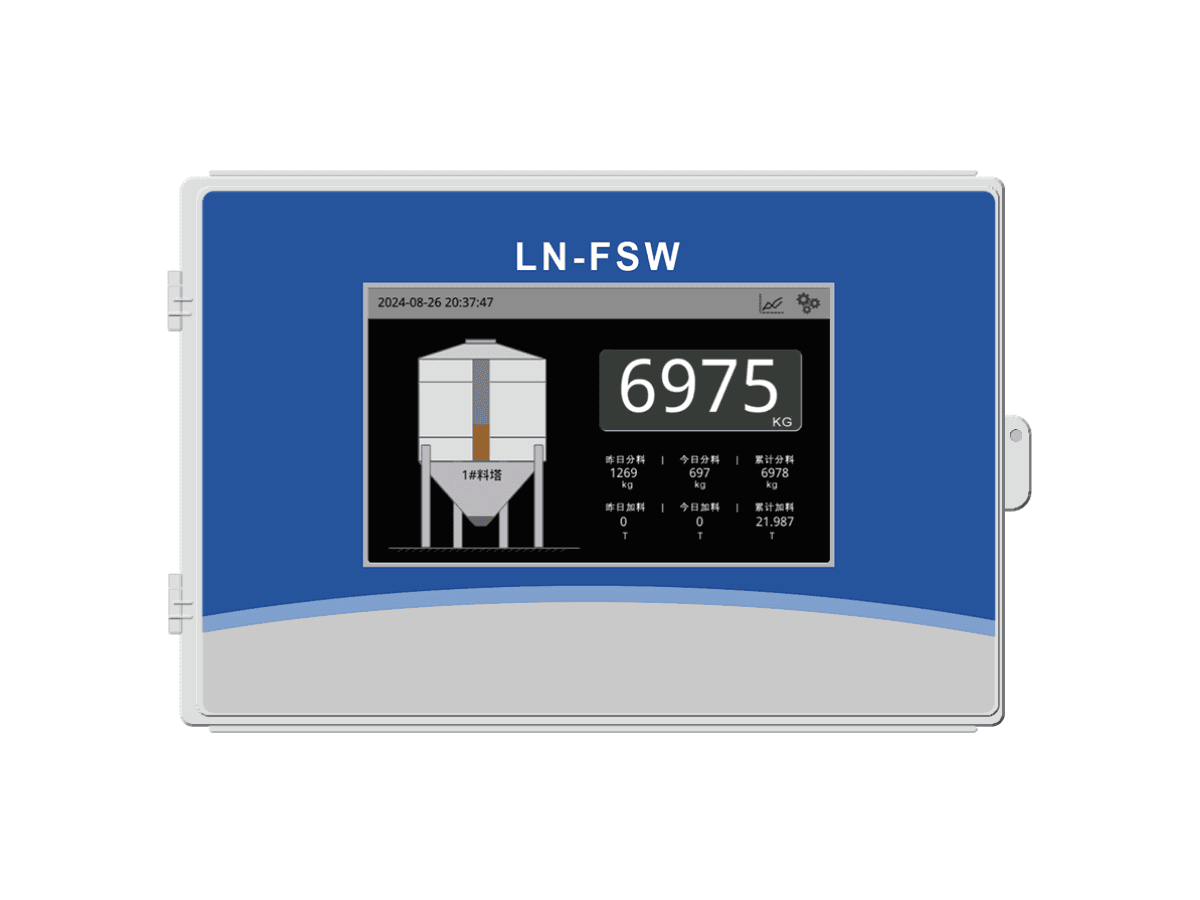
Each silo was connected to a feed silo weighing system. The system monitored the quantity of feed remaining in storage and generated feed-use data for farm management.
This created a poultry feed inventory monitoring system that reduced the need for workers to climb silos for repeated visual inspection. When feed dropped below the selected level, the system could send a remote low-feed warning, helping the farm prepare replenishment before a feed interruption occurred.
Automatic pan feeding system
The automatic pan-feeding line was configured for timed, measured and zone-based feeding. Feeding programs could be adjusted according to broiler or layer age, allowing feeding frequency and individual delivery quantity to follow the production cycle.
For high-temperature conditions, the project used a flexible feeding strategy. Between approximately 11:00 and 15:00, the system could reduce the quantity supplied during each cycle while increasing feeding frequency.
This automated feeding adjustment during heat stress was designed to keep feed fresher and reduce the time unused feed remained inside feeding pans.
4. Bird Weight Monitoring and Climate–Feeding Integration
Accurate feeding requires more than controlling how much feed enters the house. Farm managers also need to understand how the flock is responding, which is why a cage bird scale was added for continuous weight tracking.
Automatic bird weighing
The system included a high-precision automatic poultry weighing system installed beneath the rearing area. It collected bird-weight data continuously without requiring workers to catch and manually weigh birds.
The platform calculated:
· average flock weight;
· daily weight gain;
· flock uniformity;
· weekly growth trends;
· monthly production reports.
This poultry growth data monitoring system allowed managers to compare actual growth with expected production targets.
When local groups showed slower growth or unusual feeding behaviour, the system could flag the change for further investigation. Managers could then review feed formulation, feed quantity, health conditions or the poultry-house environment.
Feeding linked with environmental control
A central feature of the project was poultry feeding and climate control integration.
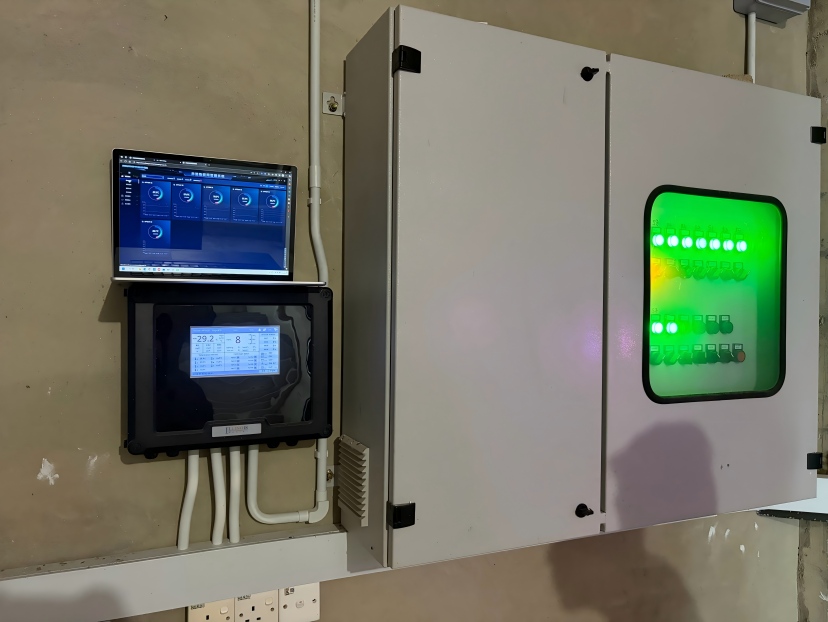
The poultry LINO Touch MAX controller monitored temperature, humidity and ammonia levels. When environmental values moved beyond the configured range, the feeding system adjusted its operating rhythm by reducing feed quantity or changing feeding time.
When the house returned to the preferred 24°C–27°C range specified in the project, the system resumed the normal feeding program.
This temperature-based poultry feeding control prevented the feeding line from following a rigid schedule while birds were experiencing heat stress.
By combining environmental information, feed consumption and flock-weight data, the farm could move from experience-based feeding toward a more measurable management process.
5. Electrical Control Adapted to Malaysian Farm Conditions
The electrical equipment was configured for Malaysia’s local power supply and poultry-house environment.
The system was designed for a 415V, 50Hz three-phase industrial supply. Wide-voltage operating capability helped reduce the risk of interruptions caused by voltage fluctuation in rural farming areas.
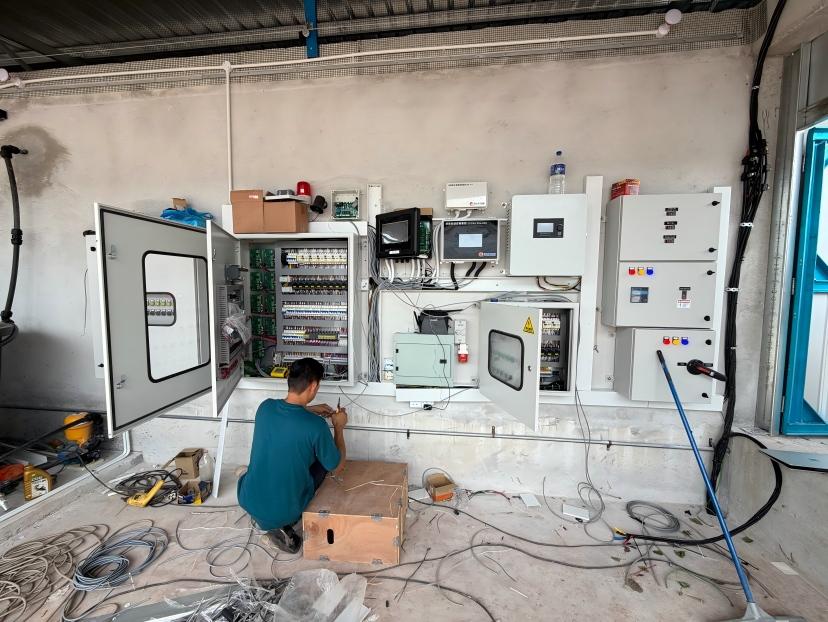
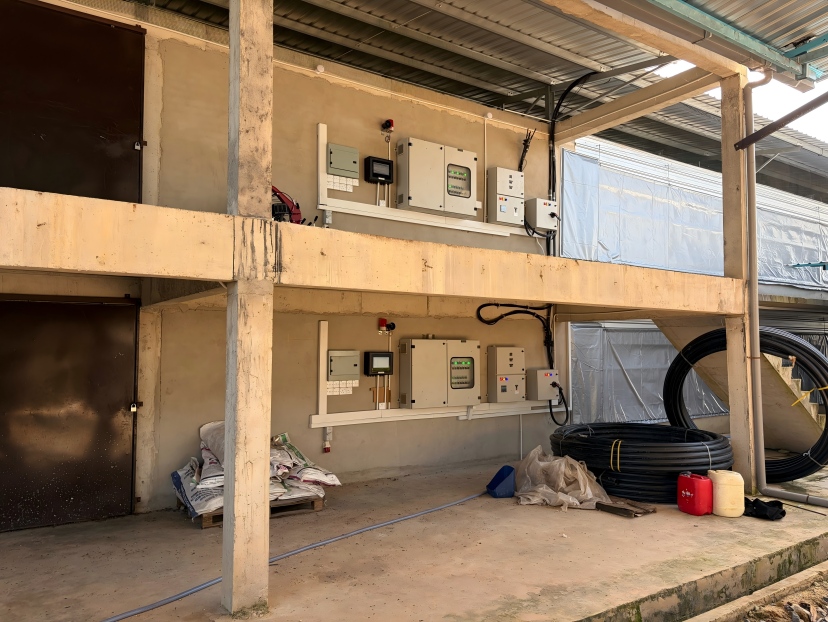
Control components were protected against water, dust and corrosive poultry-house conditions. The project used IP55 poultry electrical control panels to support operation in humid environments with higher ammonia exposure.
The complete electrical scope included:
· feeding-line control;
· silo weighing controllers;
· ventilation control;
· environmental monitoring;
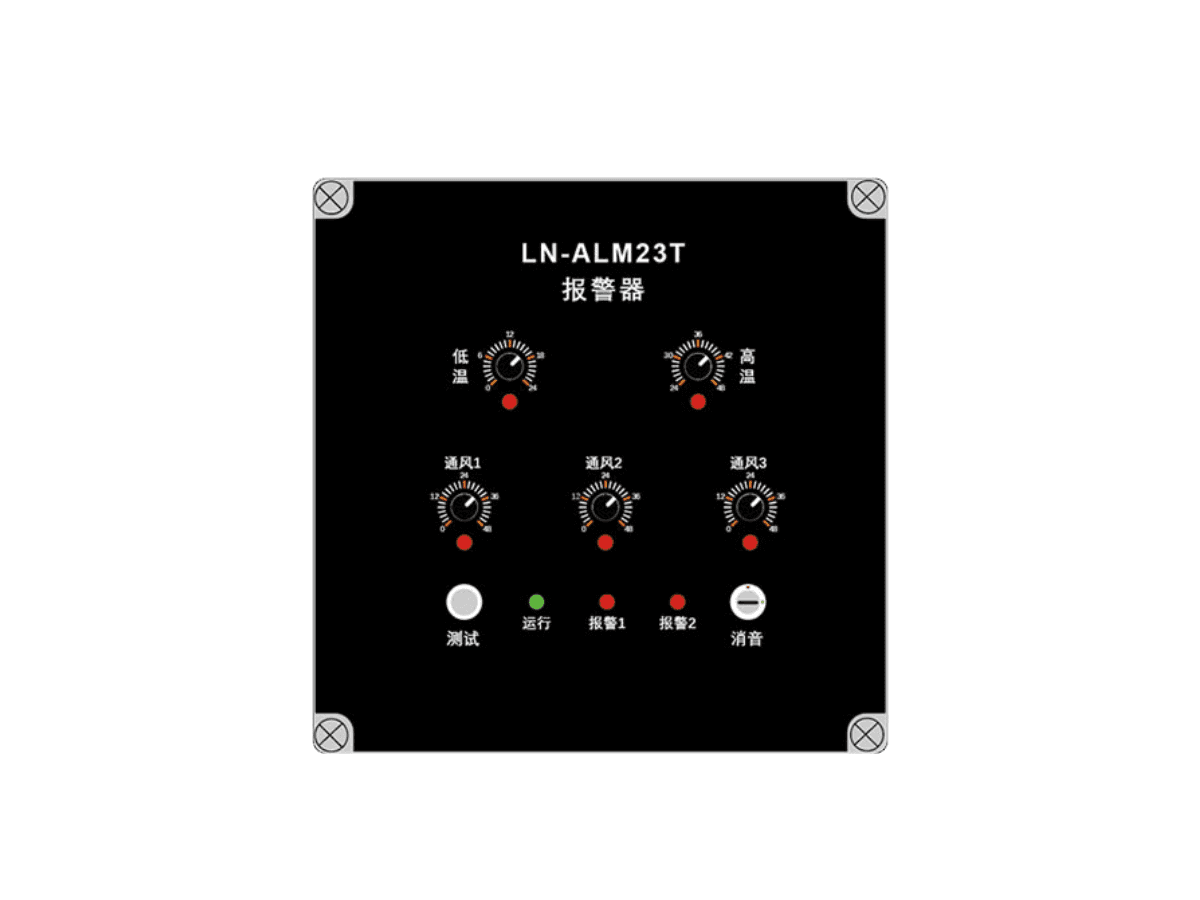
· alarm functions;
· touchscreen operating terminals;
· remote data access.
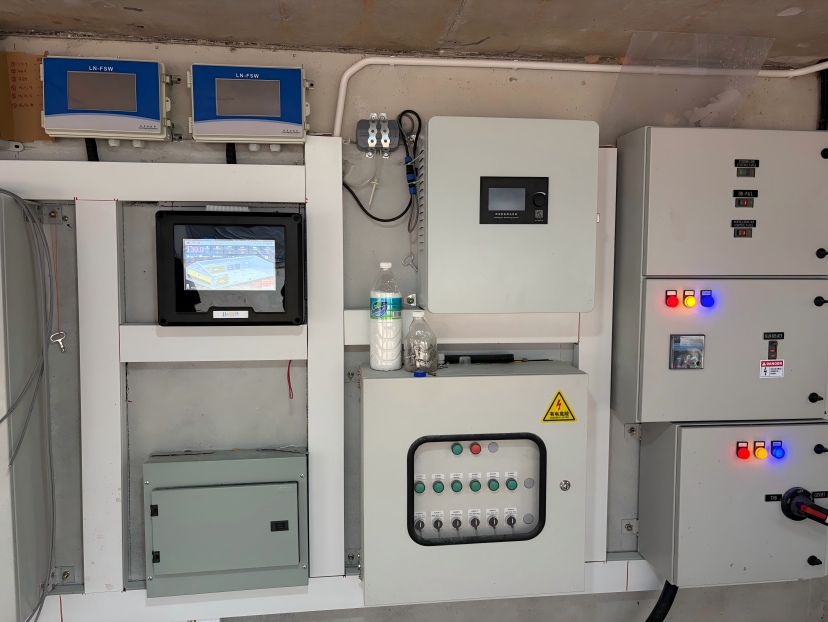
The poultry electrical control panel provided local switches, status indicators and protected electrical components. Feeding and ventilation functions were coordinated through the control arrangement because house temperature directly affects bird appetite and feeding behaviour.
The system also used an English-language interface suitable for local operators. Farm managers could access operating information through computers and mobile devices, depending on the final network configuration.
The remote poultry farm monitoring system displayed feed levels, bird-weight information and equipment status. Power loss, equipment faults and low-feed conditions could trigger remote notifications.
During implementation, technicians completed panel mounting, electrical wiring, controller setup and system commissioning on site. The field photographs show control cabinets, touchscreen terminals, weighing controllers and computer monitoring interfaces in operating areas.
This localized design allowed the equipment to match the farm’s voltage, climate conditions and daily management requirements instead of relying on a general export configuration.
6. Project Results and Value for Malaysian Poultry Producers
Following installation, commissioning and operational handover, the farm evaluated the system against its previous feeding-management approach.
According to the project’s post-installation assessment, feed waste was reduced by more than 18%. The project also recorded an estimated 15%–20% reduction in feed-related costs through more controlled delivery, reduced residual feed and improved feed monitoring.
Flock uniformity reached more than 92%. Automatic bird weighing and standardized feeding programs gave the farm clearer information for identifying differences in flock development and adjusting feeding decisions.
Manual feeding costs were reported to have decreased by approximately 60%. The system did not remove the need for farm personnel, but it reduced labour-intensive tasks such as manual feed distribution, silo inspection, feeding adjustments and repeated equipment checks.
The farm also reported lower heat-stress-related mortality and continuing improvement in feed conversion performance after feeding and environmental control were coordinated.
These results are project-level operating findings rather than guaranteed outcomes for every poultry farm. Actual performance depends on house design, poultry breed, stocking density, feed formulation, environmental management and operating practices.
The project demonstrates that a smart poultry feeding system in Malaysia should combine several functions:
· moisture-resistant feed storage;
· automatic precision feeding;
· silo inventory monitoring;
· automatic bird weighing;
· climate-linked feeding adjustments;
· localized electrical control;
· remote alarms and data access.
For tropical farms, the value lies not in adding more isolated equipment, but in making each part respond to the same production objective.
Frequently Asked Questions
What is a smart poultry feeding system for tropical farms?
It is an integrated system that combines feed storage, automatic feeding, feed-level monitoring, bird weighing and environmental control. It is designed to adjust feeding more accurately under high-temperature and high-humidity conditions.
How does the system help prevent feed mold?
The solution uses a moisture-resistant poultry feed storage system with galvanized silo construction, improved sealing, ventilation measures and anti-bridging equipment. More frequent, smaller feed deliveries also reduce the time feed remains exposed inside the poultry house.
Can the feeding system adjust automatically during hot weather?
Yes. The system can use environmental information to change feeding frequency and delivery quantity. During high-temperature periods, it can reduce the amount supplied per cycle and increase feeding frequency.
Does the system monitor feed remaining inside the silo?
Yes. The digital feed silo weighing system for poultry farms monitors remaining inventory, generates feed-use data and supports low-feed alarms.
Can the system monitor flock weight automatically?
Yes. The automatic poultry body weighing system collects weight data without repeated manual catching. It calculates average weight, daily gain and flock uniformity for production management.
Is the system suitable for broiler and layer farms?
Yes. Feeding schedules, weighing parameters and environmental-control settings can be configured according to poultry type, age and farm-management requirements.
Can operators monitor the farm remotely?
The system supports computer and mobile monitoring according to the selected communication and network configuration. Alerts can be configured for power failure, equipment faults and low-feed conditions.
What information is needed for a project proposal?
The engineering team will normally need:
· poultry-house dimensions and quantity;
· broiler, layer or breeder application;
· design bird capacity;
· silo quantity and capacity;
· feeding-line layout;
· fan and motor specifications;
· local voltage and frequency;
· required sensors;
· remote monitoring and alarm requirements.
Need a Smart Feeding Solution for a Malaysian Poultry Farm?
Illinois provides integrated equipment and engineering support for commercial poultry farms in Malaysia and other Southeast Asian markets.
Our project scope can include:
· automatic poultry feeding systems;
· poultry LINO Touch MAX controllers;
· feed silo weighing systems;
· automatic poultry weighing systems;
· poultry farm alarm systems;
· customized electrical control panels;
· remote monitoring platforms;
· on-site installation and commissioning.
Send us your poultry-house layout, flock type, silo configuration, electrical supply and required control functions.
Our engineering team will prepare a customized equipment configuration, control plan, implementation proposal and quotation for your project.
Related Guides & Projects
For the measurement principles behind feed inventory records, see our guide to feed silo weighing and inventory monitoring.
For more on the controller that ties feeding and climate together, see our LINO Touch MAX poultry climate controller.
For more in-depth guidance, continue reading our related guide on reduce feed waste with silo weighing and climate control.