Summer Poultry Ventilation Solutions: Fix Heat Stress & Cold Stress in Chicken Houses
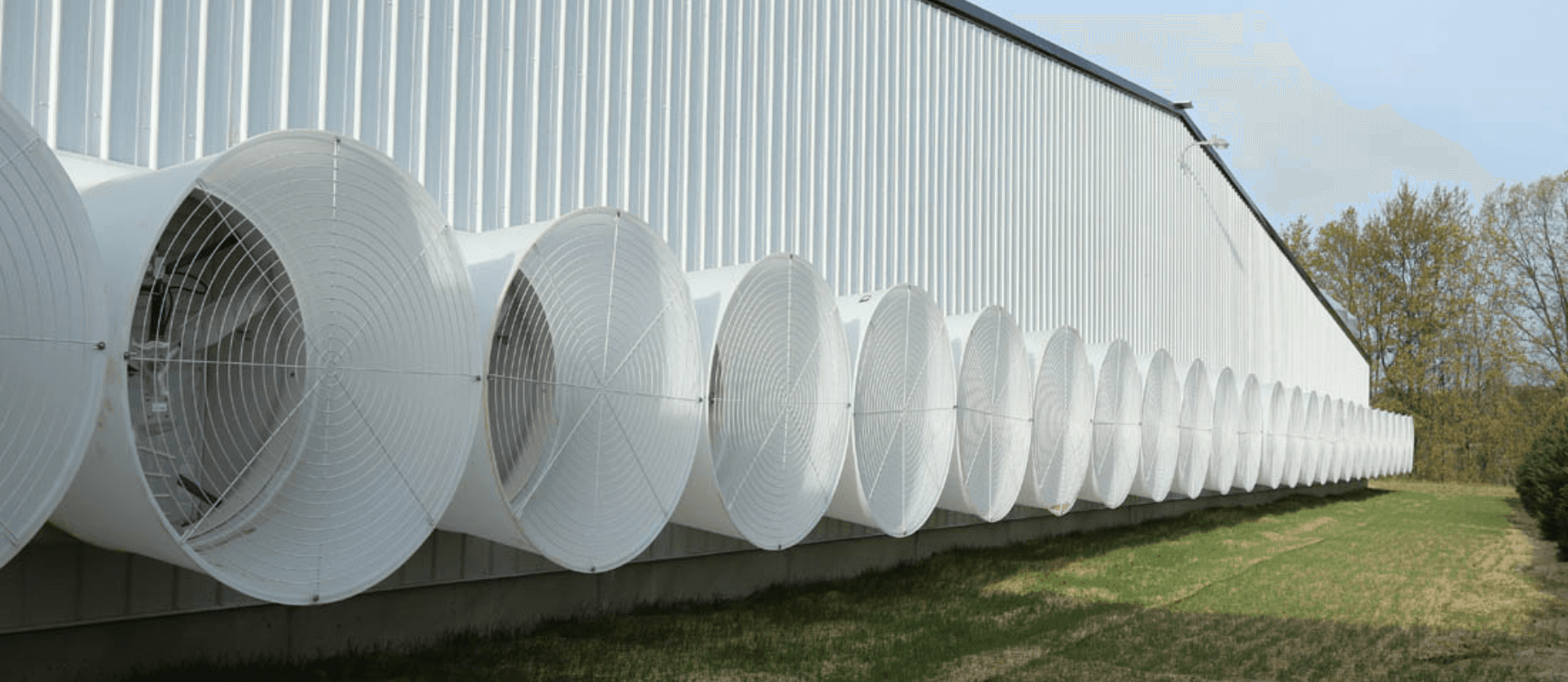
Summer is the most challenging season for poultry farm managers. Many struggle with two critical issues: uncontrolled heat stress and heat stroke when ventilation fails to lower temperatures, or cold stress and respiratory infections from over-cooling. These problems are mainly caused by unreasonable wind speed, incorrect air direction, and excessive humidity—rooted in improper equipment configuration and operational errors.
We provide targeted analysis of 6 common poultry house ventilation failures and professional improvement solutions, combined with high-performance livestock ventilation fans, EC motor fans, evaporative cooling pads, and poultry climate control systems to help you achieve stable temperature, uniform wind speed, and healthy poultry growth.
1. Why 28°C Is Safe in Some Poultry Houses But Causes Gasping in Others?
Core Problem
Low wind speed at chicken back level leads to high perceived temperature. At 28°C (70% RH):
· Wind speed 2m/s → Perceived temp: 22–23°C
· Wind speed 1.5m/s → Perceived temp: 24–25°C
· Wind speed 1m/s → Perceived temp: 25.5–26°C
Root Causes
1. Insufficient ventilation fan configuration: Underinvestment in fans ignores high-temperature & high-humidity climates; cooling pads lose efficiency, requiring stronger airflow to reduce perceived temperature.
2. Poor fan performance: Low-quality fans with unstable air exhaust under negative pressure ventilation; blade deformation reduces airflow by 20–30%.
3. Lack of fan maintenance: Worn bearings, loose belts, and dust/feather buildup severely reduce efficiency.
4. Wrong ventilation calculation: Caged houses (100m×19m) in coastal high-humidity areas need higher wind speed than dry inland regions; insufficient fans cause weak cage-level airflow.
5. Excessive negative pressure ventilation with cooling pads: Strong front wind, rear stuffiness & hypoxia, even at low temperatures.
Professional Solutions
· Maintain fans regularly: Replace bearings/belts, clear feathers/dust; upgrade aged low-efficiency fans.
· Configure fans based on extreme high-temperature & high-humidity conditions (core standard for tunnel ventilation).
· Expand front air inlets to balance pressure, unify front/rear wind speed, and eliminate hypoxia.
2. Reduced Feed Intake & Uneven Growth in Local Areas
(Common in net-raised poultry houses)
Root Causes
1. Over-designed wind speed: Excessive wind speed (>3m/s at chicken back) directly reduces feed intake and slows weight gain.
2. Unreasonable fan grouping: Large wind speed fluctuations (>1m/s) from sudden fan activation cause stress.
3. Missing cooling pad air deflectors: Direct high-speed cold air (3–5m/s) blows on chickens, triggering stress.
Professional Solutions
· Reserve 10–15% of fans as backup; only activate in extreme heat or fan failure.
· Upgrade LINO Touch MAX controllers to refine fan groups, limit wind speed difference ≤0.5m/s.
· Install insulated air deflectors to guide airflow upward, avoid direct blowing, and retain heat in winter.
3. Sudden Increased Mortality in Adult Broilers (Mainly at Night)
Heavy broilers die massively when heat stress index >165, with mass mortality above 170.
Root Causes
1. Wrong operation during spray cooling: Turning off/reducing fans raises humidity and lowers wind speed, worsening heat stress.
2. Unprepared backup power: Generators unused long-term fail to start during outages.
Professional Solutions
· Maintain full ventilation during spray cooling; boost airflow in high-humidity weather.
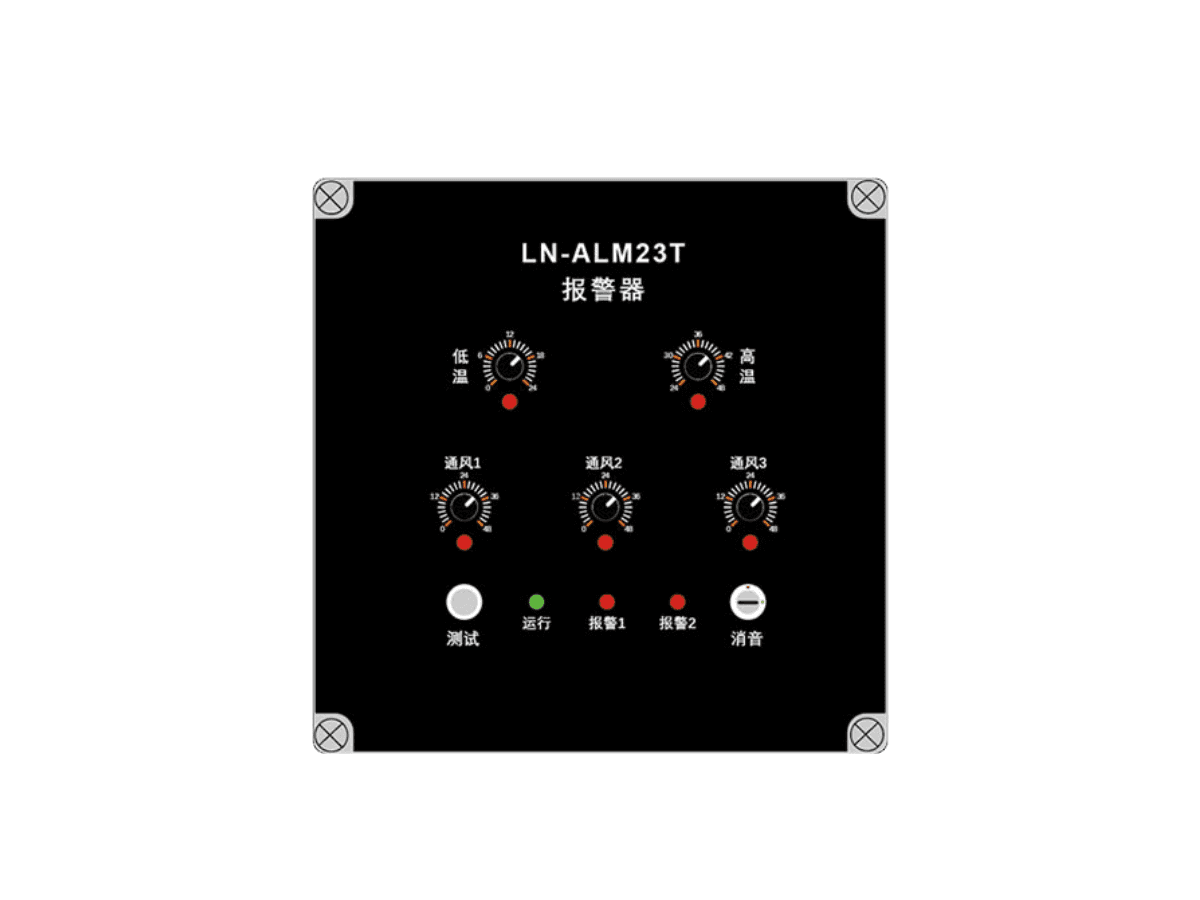
· Test backup generators monthly to ensure instant startup. An independent temperature alarm adds a safety layer by sounding alerts and triggering backup fan control if the main system or power supply fails.
4. Poor Cooling in Local Zones (Floor-Raised Houses)
Chickens avoid hot middle/side areas due to uneven airflow from misadjusted cooling pad inlets.
Professional Solutions
· Adjust cooling pad opening based on house width and fan quantity.
· Hang wind direction indicators every 1.5m to monitor and balance airflow.
· Install 24-inch horizontal agitator fans every 15m to force uniform air circulation.
5. Excessive Temperature Difference (Front vs. Rear >3°C)
(Over 5°C in high-density caged houses)
Root Causes
1. Overly long poultry houses: Air heats up while flowing to the rear; 120–150m houses have severe temperature stratification.
2. Poor house airtightness: Leaks from windows, doors, and manure outlets reduce wind speed uniformity.
3. Overlong ventilation cycle: Exceeds 60s (floor-raised) / 45s (caged), causing heat accumulation.
Professional Solutions
· Move 15–20% of cooling pads to the middle; set front wind speed 2m/s, rear 2.5m/s.
· Seal manure outlets with 3mm rubber flaps; improve overall airtightness.
· Boost wind speed: 2–2.5m/s (floor-raised), 2.3–2.7m/s (step-in caged), 3–4m/s (stacked caged).
6. Weak Cooling Effect After Turning on Cooling Pads
Only 10–15m at the front is cool; rear areas remain hot.
Root Causes
1. Extreme high humidity (>80% RH): Evaporative cooling fails in post-thunderstorm hot weather.
2. Clogged spray nozzles and blocked cooling pads by dust/feathers.
Professional Solutions
· Use well water for spray cooling; maintain full ventilation for forced water cooling.
· Install backflush devices; clean pads regularly, replace cooling paper every 4–6 years.
· Add protective nets to block debris and extend pad service life.
About Our Professional Poultry Ventilation & Climate Control Solutions
We specialize in OEM/ODM manufacturing of high-efficiency poultry ventilation equipment, including:
· EC motor tunnel ventilation fans such as our 57-inch high-capacity exhaust fan powered by a 1.5KW HNRK160 EC motor (stable negative pressure ventilation, high airflow, energy-saving 40–60%)
· Evaporative cooling pads & climate control systems
· Poultry house agitator fans & air distribution accessories
· Custom ventilation solutions for broiler houses, layer houses, and livestock barns
Our products are certified for global markets, optimized for high-temperature & high-humidity climates, and help you eliminate heat stress, cold stress, and uneven ventilation—improving feed conversion rate, reducing mortality, and maximizing farming profits.
Related Guides & Projects
For more in-depth guidance on system configuration, continue reading our related guide on poultry house ventilation design and equipment selection.