What EuroTier 2026 Revealed About Poultry Farm Automation and Equipment Compatibility
What EuroTier 2026 Revealed About Poultry Farm Automation and Equipment Compatibility
Hanover was cold in mid-November, and the heavy coats came out before the exhibition doors opened. On the first morning, queues formed at the entrance gates while visitors pulled sample cases across the concourse. EuroTier 2026 ran from 10 to 13 November and drew around 118,000 trade visitors from 155 countries, with more than 2,100 exhibitors from 55 countries. Those figures were impressive, but they were not what stayed with us after four days on the show floor.
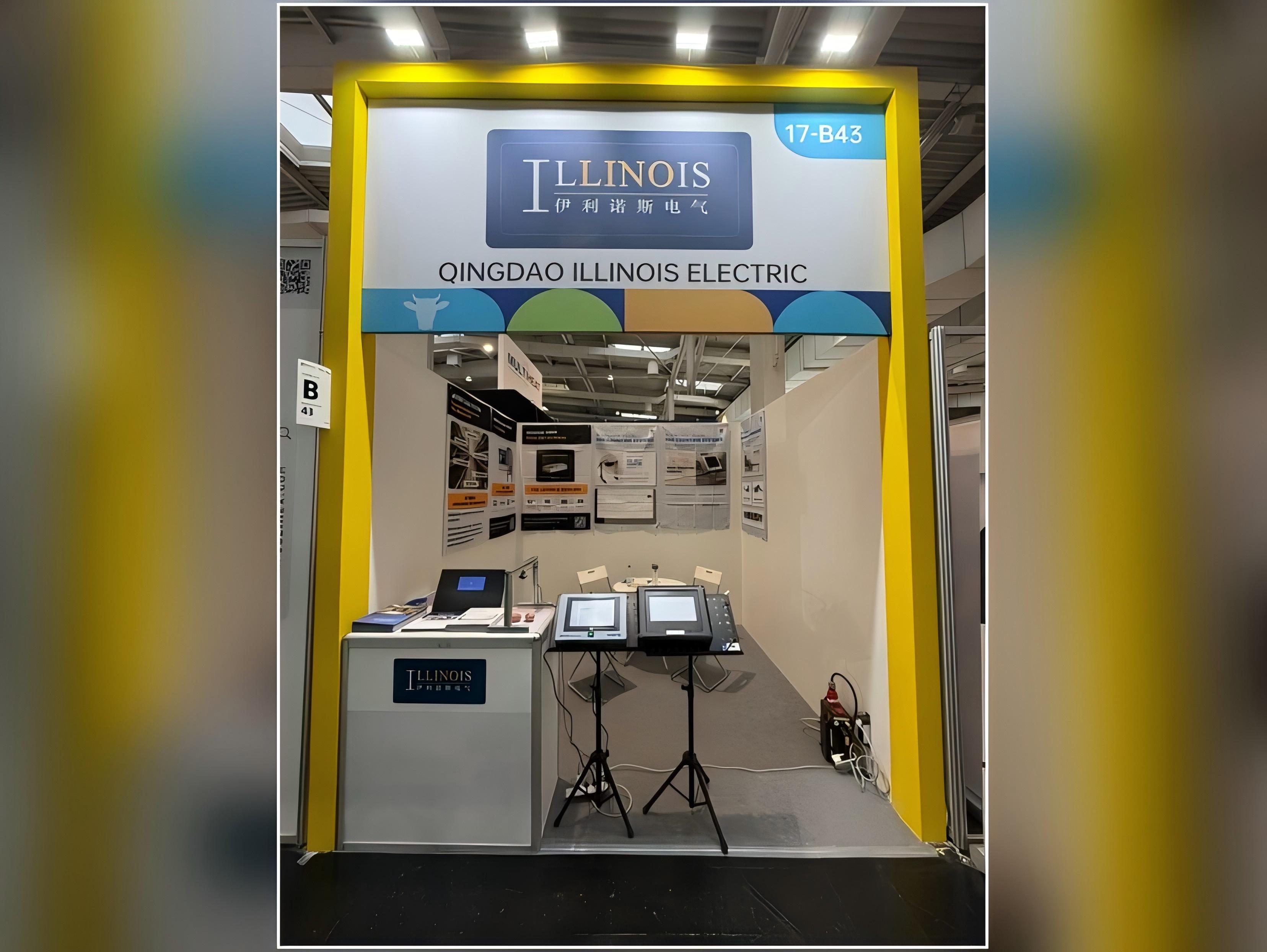
The stronger impression was how often buyers returned to one practical question: will the new equipment work with what is already installed? For anyone comparing commercial poultry equipment, screen size and polished dashboards matter far less than stable operation, service access and room for later expansion. Illinois Electric exhibited at booth 17-B43 during EuroTier 2026 in Hanover, Germany.
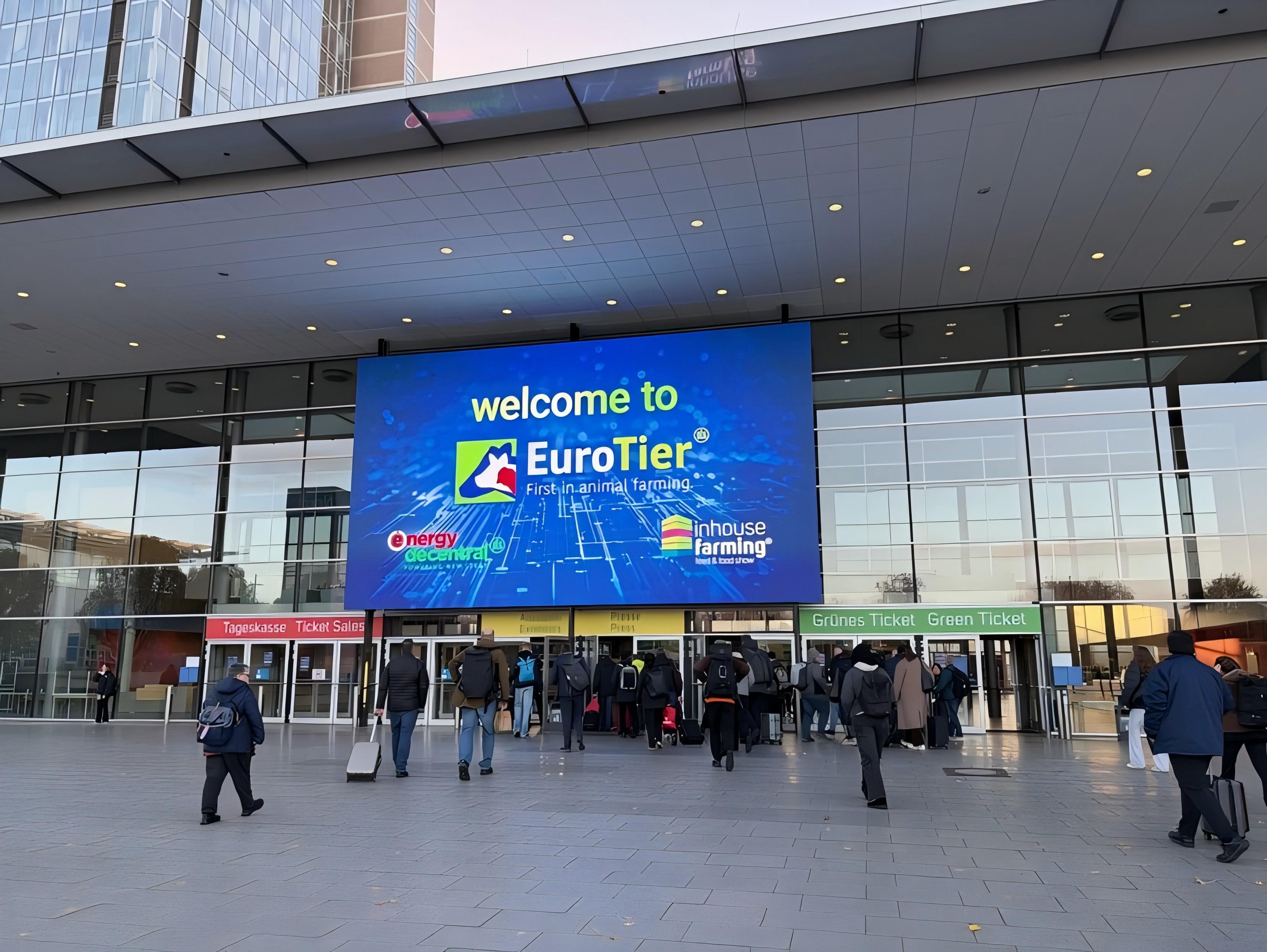

Visitors arriving at EuroTier 2026 at the Hanover Exhibition Centre.
What stood out after four days in Hanover
Several environmental-control booths followed a similar pattern. Controllers were mounted side by side on the wall, from compact seven-inch displays to larger units with dozens of outputs. Fans and inlet actuators sat nearby. One exhibitor lined up four blue control cabinets above a full row of terminals. Another cut open a fan so visitors could see the internal airflow path.
The questions from farm owners and integrators were equally consistent. Can this controller run the fans I already have? Can I replace the controller without replacing the entire system? These are the real concerns behind the phrase smart farming. Buyers want to know whether a system will remain stable inside a poultry house, who will repair it if something fails and whether more equipment can be added later.
The exhibition program placed strong emphasis on intelligent farming and connected systems that bring feeding, ventilation, manure handling and automation together. The direction makes sense. The difficult part is making products from different suppliers exchange signals and follow the same operating logic.
Why smart farm projects fail when equipment cannot coordinate
We compared notes with several integrators who had seen the same pattern. A farm upgrades in stages, buying the controller from one supplier, fans from another and the alarm system from a third. Each product may work on its own, yet the completed installation remains unreliable because the devices do not coordinate as a poultry house environmental control system.
Data and protocols do not match
Communication is often the first problem. A supplier may describe a controller as expandable, but the available connection is a single RS485 channel and the protocol does not match the field devices. Sensors then provide readings without triggering any control action. The farm has paid for an intelligent system and received little more than an additional display.
Control signals do not match the hardware
The next problem is control logic. A controller may provide staged outputs while the installed fans operate only at full speed. In the opposite case, a fan may support 0-10 V speed control while the controller offers only dry contacts. The variable-speed function is lost even though neither product is defective. This is common in retrofit work, where older fans must be paired with a newly purchased poultry farm ventilation controller.
Operators inherit too many screens and alarms
Compatibility also includes the people running the house. Several screens and separate alarm systems mean that thresholds must be set more than once. One device may report an alarm while the others remain silent. Over time, workers begin to ignore repeated or conflicting warnings. An alarm system that operators no longer trust can be more dangerous than having no alarm at all.

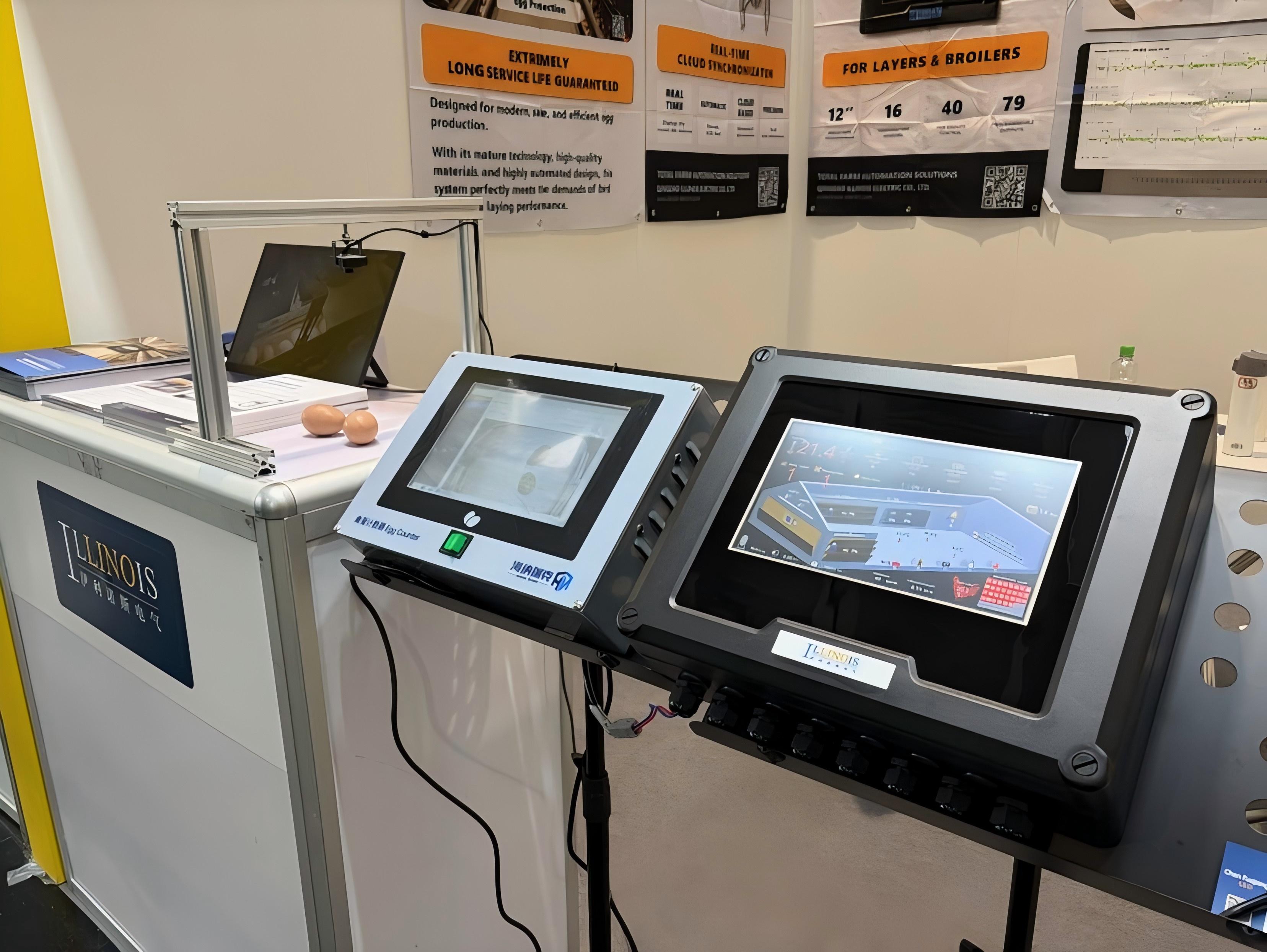
A poultry environmental controller and vision-based egg counter displayed at the Illinois booth.
Environmental control still comes first
The ventilation and climate-control halls remained among the busiest areas of the show. Temperature, humidity, ammonia and static pressure affect one another inside a poultry house. At the same 28 degrees Celsius, birds experience 50 percent relative humidity very differently from 80 percent. A clean temperature curve does not compensate for excessive ammonia or persistent respiratory pressure.
Fans and air inlets must therefore move together. Increasing fan power without adjusting the inlets can drive negative pressure too high. Power use and noise rise, while effective airflow may not improve. If the inlets open too far, cold air can drop directly onto the flock and cause local cold stress. The controller needs one operating sequence that links fan output, inlet position and house pressure.
The control strategy must also suit the local climate. Tropical farms often depend on tunnel ventilation and evaporative cooling. In cold regions, winter control may prioritize continuous low-volume ventilation to remove moisture. Settings developed for Southeast Asia cannot simply be copied into a house in Eastern Europe. Overseas projects need local commissioning, not a translated version of a domestic selection chart.
A polished interface is not the first thing we examine when judging stability. The frequent field failures are more basic: voltage fluctuations that disturb fan speed, dust that slowly affects a sensor reading, or a winch or inlet that receives a command but cannot move. A practical system makes sensors easy to clean, gives operators a manual emergency mode and prevents one failed point from stopping the entire installation.
Four checks we use when evaluating a control system
These four checks are more useful than comparing screen sizes when assessing poultry house retrofit solutions.
First, check compatibility with the installed equipment. Overseas retrofit projects rarely begin with a completely empty house. A workable proposal should identify which fans, sensors and alarm circuits can remain and which interfaces need to change.
Second, allow upgrades in stages. A farm can replace the controller and correct the ventilation sequence first, move to more efficient fan motors later and add a data platform only after the core system is stable. Each investment should produce a visible operational improvement. We met farms at an earlier exhibition in Kuala Lumpur that had delayed projects because the only proposal required a large one-time investment.
Third, include commissioning and training in the delivery scope. Parameter sheets, an I/O list, alarm thresholds and a clear inspection manual are often more useful than another dashboard. Equipment can be shipped internationally; experienced technical staff cannot always remain on site.
Fourth, confirm spare-parts lead times. Whether a motor, sensor or actuator is a standard component directly affects how quickly a farm can recover from a failure.
The same test applies to data platforms. Reports alone are not enough. If the platform cannot coordinate alarms or support changes to ventilation stages, operators have little reason to use it in their daily work.
Equipment Compatibility Checklist for Poultry House Retrofits
Before planning a poultry-house retrofit, buyers and system integrators should collect the following information to check the existing equipment against the proposed control system.
| Check Item | Information to Confirm |
| Existing controller | Controller model, available I/O and communication documentation |
| Fans and motors | Fan models, motor types, control signals and fan groups |
| Sensors and alarms | Sensor signal types, alarm circuits and pressure monitoring |
| Air inlets | Actuator types, inlet groups and available feedback signals |
| Electrical supply | Local voltage, frequency and existing electrical drawings |
| Commissioning | Control sequence, emergency operation and on-site testing requirements |
What we are taking back to our own product work
Our product range includes environmental controllers, ventilation fans and motors, together with alarm, weighing and egg-counting equipment. At EuroTier, we spent as much time studying complete system layouts as individual products. Back at the factory, the useful questions are specific. Can the control unit, field equipment and alarm module use one approved parameter set? Do the Russian, Spanish and Arabic interfaces make sense to the people who will operate them every day?
For projects with a defined I/O scope, LINO Touch SE+ offers a 7-inch interface, 15 relay outputs, four variable-speed control channels and three RS485 interfaces. LINO Touch MAX provides a 10-inch interface, up to 30 ventilation stages and up to 16 fixed-speed fan groups, with relay expansion up to 36 outputs when the required extension modules are selected. These published capacities are selection references, not a guarantee of compatibility with existing fans, sensors or third-party protocols. The final control plan must be checked against the actual I/O list and electrical documentation.
The same discipline applies when specifying an EC motor for poultry ventilation fans or an AI egg counting system for layer farms. The product must be checked against the installed controller, electrical design, conveyor or fan configuration, operating conditions and service plan. A trade-show demonstration can confirm the basic function. Only sustained operation in a real poultry house can confirm whether the complete arrangement is suitable.

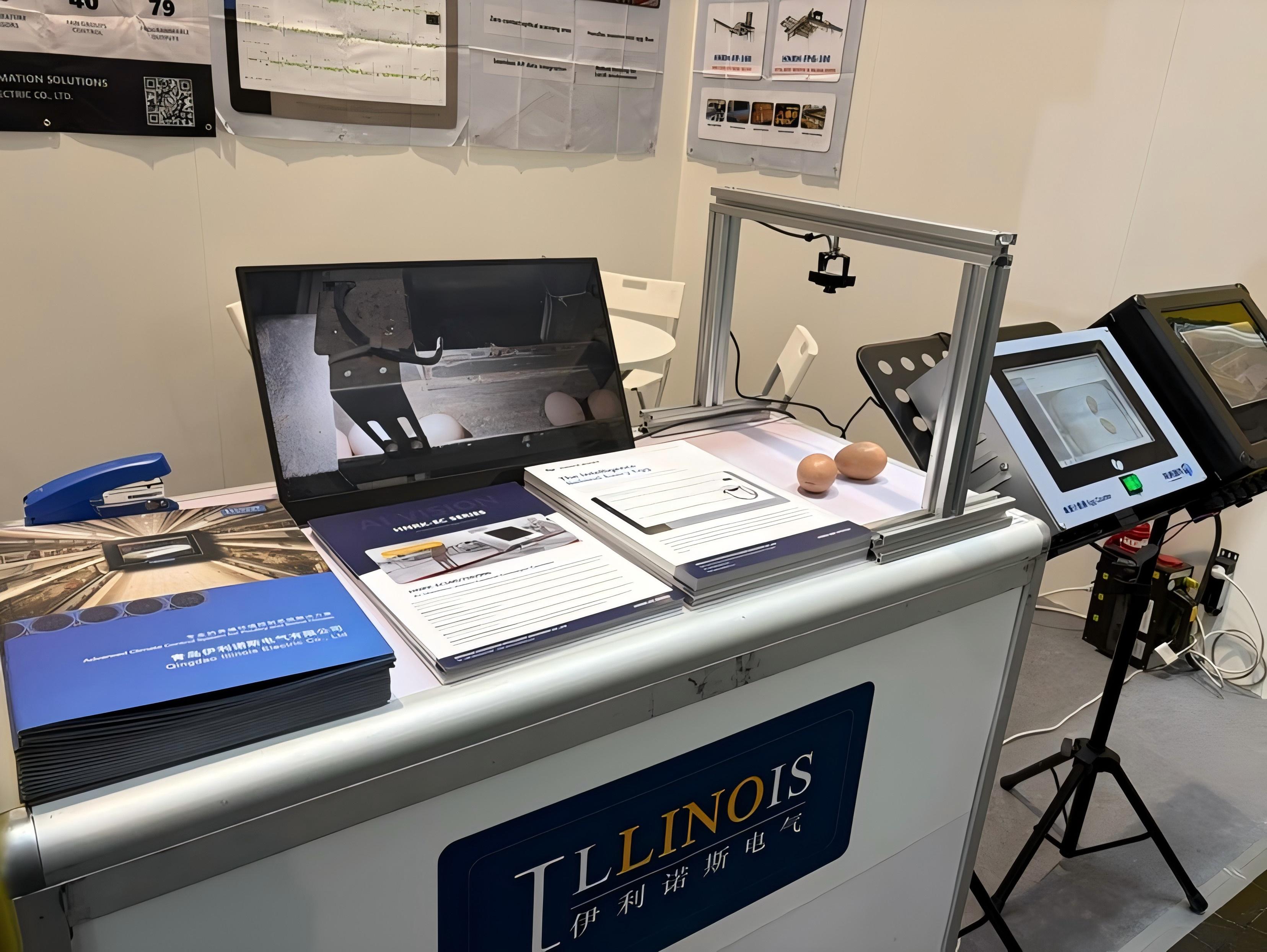
The booth demonstration combined an industrial camera, touchscreen terminals and sample eggs.
Planning a new house or retrofit
If you are building a new poultry house or planning a ventilation and environmental-control upgrade, start with the existing conditions. Send the house dimensions, fan models and quantities, number of air inlets, available sensors and alarm circuits, and the local electrical supply. We can then identify which equipment may remain, which components should be replaced and what needs to be confirmed before a detailed proposal is prepared. That work has a higher priority than choosing the largest screen.
Need to Check Equipment Compatibility?
Send us your existing controller model, fan specifications and poultry-house requirements. Our team can review the equipment interfaces and discuss a suitable upgrade plan.